Tampilkan postingan dengan label How. Tampilkan semua postingan

Minggu, 20 Agustus 2017

How to cope with panic attacks panic disorder


1. Take your anxiety with you..........feel those sensations, knowing they are NOT a disease that will harm you/kill you. Learn to rebreathe into a paper bag, because most of the dizzy/light headed sensations are because of oxygen/carbon dioxide imbalance....rebreathing into a paper bag helps this or breathing slowly in through your nose and out through your mouth.

2. Eat small regular meals, every 2/3 hrs. When we dont eat for a while, sugar levels are effected, and eventually adrenaline is released...causing more panic.

3. Get into a bedtime routine of...no caffine after 6pm, a warm bath, good book, bedroom nice temperature, and use music on low to help you drift off.

4. Try aromatherapy oils such as Lavender, or Neroli. A few drops in your palms, rub together, inhale. Use also as a massage in olive oil.

5. Read read read......by fully understanding panic and anxiety, you will be able to come to terms with it. Knowledge is the key.

6. DONT STOP going out to work or out socially. Your panic WANTS to control you, dont let it. Feel it, but go about your day.

7. See your GP, because medication can be of great help. Try counselling through the NHS or privately. Bach rescue remedy helps some people.

8. Talk to family and friends or post on panic forums to other sufferers.

9. Never give up.

10. Dont drink too much alcohol, it never helps anxiety.

11. Get some fresh air everyday, half an hour is fine.


This was taken from a forum I read on http://www.nomorepanic.co.uk/ posted by a 'Paula Lynne' I found this most useful& hope it will also help you too.

Rabu, 16 Agustus 2017

How to remember names


Forty eight years old clerk working in a government department was visibly upset when he entered my office. He wanted treatment for Alzheimer’s disease. Alzheimer’s disease is the most common form of dementia. Dementia is a serious loss of cognitive ability beyond what might be expected from normal aging process. It is characterized by loss of short-term memory, inability to learn new things, defects in reasoning and problem solving. The clerk who came for treatment didn’t show any sign of such cognitive functions. So, I asked the 48 year old clerk: Mr. S., why do you think you are suffering from Alzheimer’s disease?
Mr. S. settled down in the chair and started describing his problem: Doctor, I have some memory problems. I can’t remember names of persons whom I know very well. I can recognize their faces, but I can’t remember their names. Often this causes me trouble. Some of my friends accuse me that I lack sincerity in friendship. That is why I could not remember their names. It creates some problems in work place also. My colleagues accuse that I am careless.
I tested his recent memory in the following simple way: I showed him four objects, viz. a pen, a cellular phone, a wrist watch and a paper weight. I asked him to keep them in memory. After five minutes I asked to tell the names of four objects. He recalled all the four objects in the same order. I reassured his memory power was intact.
Tim Hallbom
Tim Hallbom, a Neuro-Linguistic Programming (NLP) trainer, NLP Institute of California, author and therapist writes:  "One of the things that brain researchers have discovered in the last few years is that your internal dialogue occupies the same auditory nerve in your ear as external sound."
Researchers have established that the people forget names because they're usually involved in some other internal conversation. So, it's real hard to hear the other person saying their name when you're having an internal conversation with yourself about how you're coming across or what you're going to say next.
In remembering names, the first thing that Tim recommends is to concentrate on staying external with the person by listening to them. Then repeat their name to yourself three times while you're looking at them.
To get the visual part in, imagine that you can see their name written on their forehead. To make it more permanent, see their name in your favorite color of magic marker. This will make it stick out the entire better. Do this while you're saying their name to yourself. If you repeat this technique for some time it becomes automatic and you can do it effortlessly.
Franklin D. Roosevelt 
Franklin D. Roosevelt, the 32nd President of the United Sates was a master at recalling names. He continually amazed his staff by remembering someone's name that he had only met once, months before. Asked how he did it, he said he saw the person's name written out on their forehead. 

Selasa, 01 Agustus 2017

How to avoid having panic attacks on the subway


This is one dude's funny, self-deprecating look at his experiences with panic attacks on New York subway trains. The first one went like this:
out of nowhere, i started feeling really intense feelings that i couldn’t control, like more and more and more nervous and scared and i wanted to get off the subway so much but i couldn’t obviously because it was moving. then my legs started shaking and i was sweating and i could only see straight in front of me it felt like the universe was collapsing in my mind, and i was hyperventilating and i slid my headphones down to my neck and gently touched the arm of this middle-aged woman next to me who was also holding onto the pole. it felt like i couldn’t control my thoughts and they were spiraling towards a point where my mind would snap and/or i would actually die
so the woman whose arm i touched took one of her ipod earbuds out and suspiciously said “is everything okay?” like i think she thought i was like trying to get money from her or gonna bomb the train or something because i was nervous and sweaty and i look a little middle-eastern, and my hand was trembling, and i said to her “i don’t know what’s happening to me, i’m really sorry, i’m terrified, i don’t know why, can you talk to me please? just for like thirty seconds?”
But the panic attacks apparently didn't end there, and over time, to combat panic, the writer came up with the five techniques for managing his anxiety on the subway. (Actually, there are eight, but who's counting?) For instance, technique number one:
wear a bunch of rubber bands around your wrist and then when you start feeling terrified, pull them as far from your wrist as possible and then release them so they snap back against your wrist and it stings. this is a cheap solution that will distract you from the terror, but you will also confirm peoples’ suspicions that you have a mental illness
And technique number three-point-five:
try to envision where you are, but above ground, when you’re on the subway. like if you are on the C line for example, between Spring Street and Canal Street, think about that car wash on 6th Avenue that charges different prices for a carwash depending on the time of day, then think about that restaurant Lupe’s, then think about the Soho Grand hotel, then you’re at Canal! then do that all the way home. you will find that you know the city better than you thought you did
Clever stuff. Worth a read, for sure.
Also worth a read, or so I hoped when I wrote it five years ago: an account of my first subway panic attack.

Minggu, 23 Juli 2017

Book Review How Not to Be Wrong by Jordan Ellenberg


A while back (11/2/11) I reviewed the book Stats.con by James Penston. That book discussed how the statistics used in randomized clinical trials can be highly deceptive. How Not to be Wrong also covers some aspects of statistical misuse, in more detail, and certainly in a much more entertaining way. Some of his comments are funny as hell. 


Jordan Ellenberg

Consider the widespread use of a statistic call the p value, which estimates the probability that the result of a study could have just been a chance coincidence rather than an actual meaningful finding. A study is generally considered positive if the p value is 5% or less.

5% is of course not 0%. There is a one in twenty probability that the study results that are deemed positive were in fact negative. But what happens if journals only publish the positive studies and not the negative ones, when there might be a large number of negative studies, and when the positive study results are not reproduced (replicated) in a second study? Well, people start believing things that are not true, that's what.

The reason for this is because, as the author points out, improbable things actually happen quite frequently. Especially if you do lots and lots of things – like experiments. 

Another issue he mentions is that, if your sample size is too small, the chances increase dramatically that one of your subjects will be an outlier that dramatically but artificially changes the average for whatever characteristic you are measuring. With a small sample, you are more likely to get a few extra prodigies or slackers in a study of people's ability to perform certain tasks. A famous example: if Bill Gates walks into a bar with a few other people, the average guy in the room is a billionaire.  

Here’s how the author starts out a discussion of the p value problem (pages 145-46) :

"Imagine yourself a haruspex; that is, your profession is to make predictions about future events by sacrificing sheep and then examining the features of their entrails...You do not, of course, consider your predictions to be reliable merely because you follow the practices commanded by the Etruscan deities. That would be ridiculous. You require evidence. And so you and your colleagues submit all your work to the peer-reviewed International Journal of Haruspicy, which demands without exception that all published results clear the bar of statistical significance.    
      
Haruspicy, especially rigorous evidence-based haruspicy, is not an easy gig. For one thing, you spend a lot of your time spattered with blood and bile. For another, a lot of your experiments don't work. You try to use sheep guts to predict the price of Apple stock, and you fail; you try to model Democratic vote share among Hispanics, and you fail…The gods are very picky and it's not always clear precisely which arrangement of the internal organs and which precise incantations will reliably unlock the future. Sometimes different haruspices run the same experiment and it works for one but not the other — who knows why? It's frustrating…
      
But it's all worth it for those moments of discovery, where everything works, and you find that the texture and protrusions of the liver really do predict the severity of the following year's flu season, and, with a silent thank-you to the gods, you publish
      
You might find this happens about one time in twenty.
      
That's what I'd expect, anyway. Because I, unlike you, don't believe in haruspicy. I think the sheep's guts don't know anything about the flu data, and when they match up it's just luck. In other words, in every matter concerning divination from entrails, I'm a proponent of the null hypothesis [that there is no connection between the sheep entrails and the future]. So in my world, it's pretty unlikely that any given haruspectic experiment will succeed.
      
How unlikely? The standard threshold for statistical significance, and thus for publication in IJoH, is fixed by convention to be a p-value of .05, or 1 in 20... If the null hypothesis is always true — that is, if haruspicy is undiluted hocus-pocus —then only one in twenty experiments will be publishable.
      
And yet there are hundreds of haruspices, and thousands of ripped-open sheep, and even one in twenty divinations provides plenty of material to fill each issue of the journal with novel results, demonstrating the efficacy of the methods and the wisdom of the gods. A protocol that worked in one case and gets published usually fails when another harupex tries it, but experiments without statistically significant results do not get published, so no one ever finds out about the failure to replicate. And even if word starts getting around, there are always small differences the experts can point to that explain why the follow-up study didn't succeed."

The book covers many subjects about which the non-mathematically-inclined can learn to think in a mathematical way in order to avoid coming to certain wrong conclusions and to zero in on correct ones. Many of these, however, are irrelevant to this blog – the chapters on lotteries come to mind. I of course found those parts a bit less interesting. But the chapters relevant to medical studies are so right on.

Another important topic the author covers is known mathematically as regression to the mean. This phenomenon can lead, as examples, to overestimates about the genetic component of human traits and explains why fad diets always seem to work at first but then later on everyone seems to forget about them. As mentioned, when you average any measurement applied to human beings, the averages can be deceptive.  

In addition to the sample size considerations described above, you can get into trouble if you start with a sample that contains people who are higher or larger on average on the relevant variable that the average person in the general population.

If two tall people marry, their progeny will usually be, on average, tall compared to others in the general population. However, they are not all that likely to be taller than their parents. As Ellenberg states, “…the children of a great composer, or scientist, or political leader, often excel in the same field, but seldom so much as their illustrious parents” (p. 301). Their heredity mingles with chance environmental considerations, and pushes them back toward the population average. That is the meaning of regression to the mean.

To understand this, think about those who embark on weight loss diets. One needs to consider the fact that most people’s weight tends to fluctuate a few pounds either way depending on a lot of chance factors, such as their happening by an ice cream truck. And when are people most likely to start a diet? When their weight is at the top of their range! So by the law of averages, they are probably in many instances going to lose weight whether they diet or not. But when they do diet, guess what happens? They attribute the loss to the fantastic new diet!

I can not say for certain, but I wonder if studies on borderline personality disorders (BPD) yield misleading results because of regression to the mean. Long term follow-up studies on patients with the disorder seem to indicate that it seems to go away after a few years in a significant percentage of subjects. This finding is misleading, however, when you look closer. 

To make the BPD diagnosis, the subject needs to exhibit 5 of the 9 possible criteria. Many of the "improved" subjects merely went from 5 criteria down to 4 of them, and were therefore not diagnosed with BPD any longer. Actually, they became just what we call "subthreshold" for the disorder. Their problematic relationships, however, were still pretty much the same.

These results could mean that subjects with BPD may naturally vacillate between meeting criteria for the disorder and being subthreshold, or between exhibiting a high number of the criteria and a lower one. Which would mean that if they qualified for the diagnosis at the beginning of the long term follow-up study, a significant proportion of the long-term study subjects were at their worst. If so, the study results may indicate regression to the mean, and therefore say nothing else significant about the long term prognosis for the disorder.

Other important statistical issues the author discusses clearly and brilliantly include assumptions that two variables are related in a linear fashion when the are not (non-linearity - cause and effect relationships that are not based purely on an increase in one variable always leading to either an increase or decrease in another); torturing the data until it confesses (running multiple tests on your study data, controlling for different things, until something significant seems to pop up); and the following problem inherent in studies designed to see if two things like being married and smoking are correlated: 

"Surely the chance is very small that the proportion of married people is exactly the same as the proportion of smokers in the whole population. So, absent a crazy coincidence, marriage and smoking will be correlated, either positively or negatively."

Any one who is serious about critically evaluating the medical literature owes it to themselves to read this book.

Rabu, 05 Juli 2017

Nairobi Parenting Clinic How Best to Handle Criticism


Nairobi Parenting Clinic: How Best to Handle Criticism:Have you ever had a grain of sand get into your eye and felt it's sting? Have you ever seen gold at the stage where it's being mined and after it has been refined? Have you ever  been criticized for something you may or may not have done? If yes, how did it feel to be criticized and how did you react to the criticism? Read through the following article to discover how criticism can sting like a grain of sand in the eye and how you can 'mine gold' from it...

Rabu, 21 Juni 2017

SANCTUM ARC Winner! Also how I antiqued those maps


Well! Thanks so much to everyone who commented last week--I was thrilled to see that so many people feel the same way I do about maps to go with books.

In a few weeks, I'll unveil the map of the dark city, the place where most of SANCTUM takes place, on my website. Still working to get the final details in place.

But for now--one of you has won an ARC of SANCTUM, and a custom copy of that map!

And the winner (chosen by random number generator from the comments left in this post) is ...

Stephanie Diaz!

Congratulations! I hope you enjoy the book and the map!

Some of you have asked me why the maps look so aged and worn, so I will tell you: I did that part myself. It was kinda labor intensive, but very much worth it. Here's what I did:

  1. I printed the maps on heavy, 25% cotton paper that already had a cream tint to it.
  2. I painted each map with tea. Just me and my basting brush and English Breakfast. Yep.
  3. Once both sides were saturated with tea, I scuffed the edges of each map using a rag. Rubbing. Lots and lots of rubbing.
  4. I dried each map for 10 minutes in the oven. 200 degrees Fahrenheit.
  5. I burned the edges of each map in a candle flame.


For each map, this process probably took about 25-30 minutes start to finish. Now you see why only 45 copies exist :)

And I have about 6 left! So ... there will be more opportunities to win one!

Have you ever "antiqued" a document or picture before? Did you do something different from what I have here? How did it go?

Kamis, 15 Juni 2017

Origins Blogfest How it all began


Today I'm participating in the Origins blogfest, hosted by the very awesome Matt MacNish, DL Hammons, Alex J. Cavanaugh, and Katie (Creepy Query Girl), where the participants answer the following: When and how did you first become a writer? How did it all begin? What are your writing origins?

For me, it was rather simple and abrupt. It was the weekend right after my birthday. For a few months, I'd been sort of playing with the idea of writing a book, but, having never written so much as a haiku outside of regular course assigments (oh-so-many years ago), it seemed kind of random. I think this happens to a lot of people--everybody thinks they can write a novel, right? That was me.

That weekend, though, I started it. And ... rapidly got sucked in to the point of obsession. Four weeks later, I'd written a 98k word paranormal romance. It was the most ecstatic, amazing experience. I couldn't believe I'd actually done it! I'd written a book!

Like many newbie writers, I was so infatuated with this story that I was initially blind to its flaws, and I wrote about 80k words of a sequel before I abruptly halted it. I realized I might need to slow down and learn a thing or two. So I started doing my homework, participating in forums, finding myself a crit partner, learning about the whole process--including the fact that I was one among at least 30,000 querying writers. That's a lot of competition.

It was two years ago this month when I figured that out. That was when I started writing SANCTUM--which will be released in the fall. Wow. It feels so funny to say that. So much has happened since then. I've written six full-length manuscripts and a few hundred pages of other stuff (short stories, partially completed work). I've made incredible writing friends. I've learned a lot. I've become part of a community. And I've had--and continue to have--A LOT of fun.

That's it for me! I can't wait to go around and read everyone else's stories! And if you're not participating in the blogfest, please tell us how you got started in the comments!

Rabu, 17 Mei 2017

Nairobi Parenting Clinic Nairobi Parenting Clinic How Best to Handle Criti


Nairobi Parenting Clinic: Nairobi Parenting Clinic: How Best to Handle Criti...: Nairobi Parenting Clinic: How Best to Handle Criticism :Have you ever had a grain of sand get into your eye and felt it's sting? Have yo...

Kamis, 11 Mei 2017

How to find mental health care when money is tight


This is a great New York Times article looking at how to approach mental health care when you can't even really keep up with your regular bills. The lede:
IMAGINE this situation. You fall into a deep malaise. Friends say you need help, but you don’t have insurance (or the insurance you do have has very limited mental health benefits), and you worry that extra bills will only add to your malaise. So you do nothing.

And that’s what many people do. According to a recent survey by the federal Substance Abuse and Mental Health Services Administration (Samhsa, pronounced SAM-suh) , the leading reason that people with mental health issues don’t seek treatment is cost. They fear the fees.

It doesn't have to be that way, though. You can take a variety of free and low-cost steps to improve your mental health -- making one small change in your routine per week, joining a support group, joining an online group, and so on. And if you still need help, the article suggests a number of mental health care options, from seeking out providers with sliding fee scales, school psychologists, crisis hotlines, and the likes.

Jumat, 28 April 2017

How Do You Do It And How Do You Want It


I'm talking about beta-reading, of course.

I knew nothing about critiquing fiction when I hooked up with my first and primary crit partner, JD. I'd been a voracious reader all my life, but I'd never taken a writing course or spent time around writers. The only thing I knew about critique was from my years in academia. Guess what? People are harsh in academia.

The first time I got ahold of JD's writing, I think I frightened her. But she's really brave and totally open, and it ended up working out just fine for both of us. I've been a beta-reader for a few others, too ... with mixed results.

Every beta-reader has a different style. Here's mine: I do several things at once because I CAN'T ignore ... anything.

I line-edit:
  • Surface stuff: missing words, simple typos and spelling errors.
  • Simple mechanics: I have a low tolerance for grammatical errors. I have a lower tolerance for complacency about making them.
  • Word choice and language precision: choosing the proper word, phrase, and image is key to strengthening a sentence, a scene ... and sometimes, I do not think that word means what you think it means. I mark clichés and things that just sound off to me.
  • Unintended repetition: I mark words, phrases, and dialogue tags if they occur more than once in the same chapter or ... if they bug me.
  • Sentence construction and flow: Variation is lovely, and precision is essential. A present participial phrase (if indefinite) must reflect simultaneous action, for example. I'll mark awkward/clunky constructions, flabby prose, say-nothing sentences.
I also mark all the turns of phrase and images I think work really well, passages that are particularly powerful, and lines that make me laugh or pause.

Next comes:
  • Scene: it had better be necessary and multifunctional (e.g., not just to show me more about a character, but showing me more about the character while moving the plot forward). I might comment on length if it feels draggy or redundant and suggest a way to trim or rearrange so the scene is tighter. Sometimes I suggest deleting scenes altogether.
  • Backstory: only when it's needed, and no more than is essential ... but enough so I can understand what the heck is going on. I comment on the timing and extent of the backstory.
  • Setting: Must. Have. Sense. Of. Place. But it must be integrated into the story so the pace is preserved.
  • Dialogue: stilted, redundant, boring and purposeless, cover for info-dump, inconsistency in vocabulary/voice/pattern of speech, or anything that just doesn't sound like natural conversation will get marked.
  • Characterization: consistency within the character and with the character arc, including intensity of emotion, inner thoughts, mannerisms and other external behaviors, and relationships with other characters. If there are child characters ... I will comment on whether that child's behavior and language is consistent with what I know of child development. And if there is psychopathology or trauma, I will address it both from a technical perspective and a story perspective. For good or ill, I will describe how I feel about the character at any given point.
  • Plot arc: I will comment on general plausibility and tension, and identify things that seem illogical or inconsistent (plot holes). I might make predictions for what I think will happen so the writer can see how I'm understanding and interpreting the story--and so the writer can get a sense of how predictable the story is.
I tend to leave a lot of red ink on the page. I thought this was how everybody did it. I was wrong (and
naïve).
Now ... as I mentioned, I've had various reactions to my crits. Some were met with gratitude, and a few were met with radio silence or defensiveness. It was an important lesson: writers have different goals and needs, and different betas serve different purposes (you all probably knew that already).

There are lots of reasons writers seek beta-readers:
  • Simple validation--they just need someone to tell them they're good
  • Encouragement--they need gentle suggestions and a ton of positive feedback
  • Tell-me-if-I'm-crazy or genre questions--they need someone to honestly tell them if an idea is crap (JD does this one for me all the time) or to help them decide the genre of the piece
  • General impression/overall style--more of a broad review of theme, voice, style, plot, and/or characters/relationships
  • Specific questions/expert review--review of smaller-scope issues like making sure something is correct from a technical perspective
  • Getting the piece ready for agent or editor eyes--this would be the no-holds-barred crit

Which brings me to: BETA, know thyself (no such thing as being all things to all writers)

Followed closely by: Writer, know THYself (if you don't, you're going to get frustrated. Or hurt.)

I'll tell you where to shove
that red pen ...
When you are seeking a beta, ask yourself what you need (it may not be the same as what your writing needs), and be really honest in your answers (about both you and your writing, preferably). Then seek a beta who can meet those needs. Know which need you're meeting.

If you are the beta-reader, know what you can offer and communicate that to the writer. Know when to tell the writer you might not be the best match. It could save you some grief.

What kind of beta are you? What do you do well, and when are you not the best fit for a writer?

What are you looking for in a critique, and why? Do you have different beta-readers for different stages of your process, or who have different purposes? What makes you trust your beta(s)? What makes that relationship work?

On the Sisterhood front: be sure to check out Deb Salisbury's post on her writing goals for 2011!

Sabtu, 11 Maret 2017

When and How Can a Parent Stop Parenting


In her column of 9/13/09, a letter writer asked Dear Abby:  “At what point does a parent stop giving unsolicited advice? It is painful to watch my "child" repeatedly make choices that aren't in her best interest.”  The writer's daughter was 43. 

After describing some self-destructive behavior by her daughter, the writer added, “Although I am trying to keep my mouth shut, she tells me she "feels" my disapproval… Must I duct tape my mouth shut?

The relationship between parents and adult children is by its very nature a bit of a mine field. In order to rear their children properly, parents have to discipline them. Parents have to tell children what to do, what not to do, and how to behave in various social situations. Parents have to find ways to make their children follow these parental directives. Good parents continually set limits with their children.

The difficulty is, when is this supposed to stop?

Does the child suddenly become capable of making his own enlightened choices by virtue of having lived eighteen years? Should parents ignore the wisdom of their added years and never advise their adult children about anything? If the parents do persist in giving counsel, how upset are they going to be if the child chooses not to follow their sage advice? If a parent suggests a course of action over a particular issue, will the adult children feel infantilized?

Even with peers who are not relatives, the issue of when and when not to give advice can get to be problematic.  In Eric Berne’s psychotherapy model, transactional analysis, he shows how asking for and giving advice can become a “game.”  On the surface, two people may seem to be engaged in an “adult to adult” conversation, but the subtext may be entirely different.  One member of the dyad may be acting like, say, a helpless yet petulant child trying to frustrate the other member, who may be acting out the role of an exasperated parent who thinks he or she knows what is best for the other person.

A game people play

When the two parties actually are parent and child, the question of whether or not there is a hidden agenda being acted out becomes that much more complicated.  The parents may claim that they are “just expressing their opinion,” while the adult children feel like they are being told what to do as if they had no valid opinions on the subject themselves.  Is the parent’s advice merely an opinion, or is it a directive (a commandtelling the child how to behave)?
 
Unless parents and adult children are adept at metacommunicating about this issue (talking about the way they talk to one another), tension is bound to develop.

This situation becomes compounded exponentially in those situations where the parents themselves are highly conflicted about the advice they give.  They may be unsure of and unhappy with their own choices in life, but cannot admit that even to themselves - let alone to their adult children.

In such a case, two events frequently transpire: the parents bring up the issue involved rather often — because they are themselves preoccupied with it — and they give out a double message.  The offspring often interpret the advice to mean “Do it because I did,” but almost simultaneously, the way the advice is given may also have elements suggestive of “I hope you don’t have to do what I did and become miserable like me.” Whenever this chain of events takes place, a question about the motivation behind the parental advice giving is invariably created for the child.

The child must choose between two possible presuppositions. As mentioned, either the advice is meant as a directive or is merely the parent's opinion about a controversial issue. The frequency of the advice giving will most usually indicate to the child that how he or she behaves is a matter of grave concern to the parent. Therefore, the younger family member will presuppose that the parent's statements about the issue are directives or instructions.

But which part of the double message should the children heed? In situations where the advice is given ambivalently or is part of a double message, they will then make an effort to determine, using principles of ordering environmental cues that I describe in my book, Deciphering Motivation in Psychotherapy, which side of the double message to follow.
  
Consider the example from that book of a woman I will call Trudy and her mother. Trudy was having all kinds of anxiety symptoms over making a decision to really commit to her boyfriend.  Her mother had said on numerous occasions that "marriage is a mixed blessing: one has to take the bitter with the sweet."

One could interpret this as sage advice on the wisdom of not expecting perfection and retaining one's equanimity in the face of unavoidable adversity. Nothing in the lexical content of the statement indicates that Trudy's mother was commanding her to behave in any particular fashion or make any particular choices regarding marriage or spouse selection. The statement can be viewed as an expression of the mother's opinions about life and as good advice - nothing more.
  
On the other hand, the fact that the mother seemed compelled to drive this point home by repeating it over and over again suggested otherwise. The statement began to sound like a warning: "You'd better watch out! If you get married, you'd better be prepared for all the bitter you're going to get along with any sweet!" Every time the mother would talk about the good points of relationships, she seemed to be throwing in a warning about it.

Not only that, but her frequent repetitions indicated to the daughter that the mother was very concerned about whether the message had been heard loud and clear by Trudy. Perhaps she was worried that Trudy had not understood it the first twenty times it was said.


Naturally, Trudy began to worry about the consequences of getting involved with men. She became concerned not only that she might be in for a rough time, but also, for some reason, that her mother might become very upset about it. What Trudy did not realize was that the mother's repetitions indicated that she was trying to convince herself, not Trudy. In any event, the motivation presupposed by the mother's statement was in question, and the patient had been forced to guess what was correct. A good therapist would be alert to the possibility that Trudy may have guessed wrong.


Kamis, 09 Maret 2017

How to enhance your creativity


Creativity is the product of creative thinking
A general notion is that creativity is the phenomenon whereby a person creates something new that is outstanding and that has some kind of value. In my view creativity is the product of creative thinking, a mental faculty which every person is endowed with.
Two types of thinking – directed and undirected
Creative thinking is otherwise called undirected thinking. Normally one is instructed to use directed thinking which is goal oriented and rational. Such thinking requires a clear, well defined goal. One must then find a path that leads to the goal, with the aim of doing so as directly as possible. In general, directed thinking avoids wandering aimlessly, exploring odd options, and looking for creative solutions. Just such aimless wandering might be necessary to arrive at highly novel solutions. This type of meandering thought is called undirected thinking. Sigmund Freud who founded the discipline of psychoanalysis identified dreaming and day dreaming as forms of undirected thoughts that are not trammeled by the ordinary constrains of reality. Undirected thinking takes us to destinations that are sometimes murky and sometimes insightful. It plays an important role in creativity and in the solutions to problems that are poorly defined.
Creative thinking and globalization
According to the noted psychologist Mark A.Runco,Psychology Department, California State University, creativity has recently started to receive the attention it deserves by researchers in cognitive psychology because of the fast and complex changes such as globalization and technology advancements, which characterize the environment in which we live and operate.
Productive thinking and reproductive thinking
The Gestalt psychologists of Germany during the early twentieth century distinguished between reproductive and productive thinking.  Reproductive thinking entails the application of tried-and-proved true paths to the solution of a problem.  The thinker reproduces a series of steps that are known to yield a workable answer by using long term memory. Productive thinking, on the other hand, requires insight and creativity.  In view of the Gestalt psychologists, the thinker must see a new way of organizing the problem, that is, a new way of structuring the elements of thought and perception.
Trial-and-error vs. insight
Thorndike's puzzle box
Kohler's experiment
In psychological experiments on learning the animals use trial-and-error method of problem solving. Trial and error can be regarded as one form of reproductive thinking. Edward LeeThorndike was a pioneer in the experiments on leaning of animals using puzzle boxes. On being placed in the box, a cat pawed randomly about the box, obviously irritated by the confinement. Once it discovered the escape lever, the cat learns to associate the lever with a way to escape. That means the cat learns by trial and error method. Wolfgang Kohler, a Gestalt psychologist, designed a problems such as the following: a chimpanzee  is in a large cage along with several crates. Hanging from the top of the cage, out of reach, is a banana. Kohler reported that in this setting the chimpanzee would appear to be lost in thought, and then suddenly the proverbial light bulb of insight would flash. The animal would then move the crates under the bananas, stacking them to form a ladder to reach the food. In another problem a chimpanzee insightfully learned to join together two sticks in order to reach a banana lying outside the cage. The chimpanzee produces a new way to solve the problem out of productive thinking. This is the phenomenon of creativity.
Application of creativity
Writing, musical composition, architectural design, computer programming, engineering design, painting, and sculpting are just a few examples of tasks that call from creativity.
Historical versus personal creativity
Historical refers to ideas that are novel within the context of the whole of human history. The creator produces a product—some visible symbol that embodies his or her idea—that may be judged by others.  Consider the works of art or equations of physical theory. The Sistine chapel, the Mona Lisa, the laws of thermodynamics, and the general and special theories of relativity are products that plainly creative in the historical or product sense. Cognitive psychologist John R Hayes in his noted book The Complete Problem Solver argued that three criteria must be met before a product of the human mind ought to be regarded as creative.
 First, it must be novel or unique. Certainly, this is implicit in our everyday discussions of creative acts as well as in the distinction we encountered earlier between reproductive thinking, on the one hand, and productive, insightful creative thinking, on the other. 
Second a product must be judged as useful in some context. Here, many artists, inventors, scientists, and philosophers have lost in their ideas for fame. Their creation may have been novel but were utterly useless. Only when a product somehow connects with the pasts or find it niche in a cultural context does it stand a chance of being regarded as creative. This may take time—more time than the creators have. Some have been acclaimed as creative in the historical sense only after their deaths.
Third, the products must have demanded some special ability or talent on the part of their creators Hayes’s criteria of novelty, usefulness, and talent give very different answers to the question what is creative, depending on one’s cultural point of view.

Stages of creativity

The early twentieth-century reformer Graham Walls got somewhat nearer the source of the creative process, which he outlines in his book, The Art of Thought. Summarizing his own and other people's work in this area, Wallas described four stages of creation.
1. Preparation. The person expecting to gain new insights must know his field of study and be well prepared. This seems to fit what we have experienced 0 people get inventive ideas mainly in their own fields - poets in poetry; scientists, in science.
2. Incubation - Wallas noticed many great ideas came only a period of time spent away from the problem. This was certainly the experience of Archimedes when he got his idea in the public bath. Many ideas come to us when we are away from the problem, usually after actively engaging with the problem.
3. Illumination. This is the "click" or "flash" of a new idea. It's a mysterious phase. Resting the mind by doing other activities was the only suggestion Wallas could offer about how creative ideas form.
4. Verification. In this final step, efforts are made to see if the "happy idea" actually solves the problem. Since "great" ideas don't always work out in actual practice, this final step is vitally important to the success of any project.
We know that invention comes only in a person's field of specialization. Wallas is right when he says there must first be a Preparation stage: people have to become knowledgeable in some field before they may expect ideas to "dawn" on them in that area.
The more we know, the more apt we are to get new ideas; novel ideas seem to come from a fortunate scrambling of information we already have. And yet, although a certain threshold level of knowledge seems necessary for creativity, creative breakthroughs are not always the product of the most expert thinkers in a discipline.
Creativity and intelligence
There has been debate in the psychological literature about whether intelligence and creativity are part of the same process (the conjoint hypothesis) or represent distinct mental processes (the disjoint hypothesis). Evidence from attempts to look at correlations between intelligence and creativity from the 1950s onwards, by researchers regularly suggested that correlations between these concepts were low enough to justify treating them as distinct faculties of mind.
How to enhance creativity?
Acquire sufficient knowledge in the subject you are interested and think flexibly.

Jumat, 27 Januari 2017

The Power of Novelty in Visual Perception or how I screwed up the company newsletter


I work for a private mental health agency, and on top of seeing clients, I have a lot of other responsibilities. Like program evaluation and outcomes research. Training. Supporting quality control processes.

And, for some reason only understood by my boss, I also have to write the newsletter (those of you who actually know me personally will understand how funny that is).

Because our company is comprised of therapists who either go out to people's homes or practice in doctors' offices statewide, I've been doing profiles of our employees and contractors to help them connect with one another. You know, a picture and some background on the person.

Last week, I was doing this newsletter at the last minute, as always, and I put together three lovely therapist profiles and sent it out.

One of the profiles ended with the following sentence: "she participates in a training program at a local Marital Arts Center."

Did you spot the typo right away? I didn't, at least, not before I sent it out to about 120 of this poor therapist's colleagues. And I really did read it over a couple of times before I hit SEND, I swear.

Why aren't we efficient typo-catchers with our own work?

Well, I'll tell you why, because I know you were wondering. Our eye is greatly affected by what we expect to see. So much of our understanding of the world is based on the mind's ability to fill in blanks, to skip efficiently over visual information, fill in gaps, and form a cohesive whole from it. When I know the word I expect to see, sometimes it's hard to spot the missing or switched letters. But also, if it's something I've looked at several times in quick succession, my eyes skim over it even more, because I'm already used to looking at it.
Some things that might help:
  1. Obviously, have someone else read it (I don't have time to have everything proofread at work, but it's great for my creative writing if beta-readers help me with it)
  2. Set it aside and come back to it later (some of the novelty wears off if you give your brain a long enough rest from the material)
  3. Look at it in a different way (some people have talked about the benefits of printing pages instead of reading on a computer screen, and I think the novelty of looking at the printed page might help the author spot things)
  4. Take it line by line. When I make recommendations for kids diagnosed with ADHD, one of them is often to break things down, including using a paper or ruler to help the kid read one line at a time and really focus instead of getting overwhelmed by the whole page. I think this works for everyone--when it's needed.
  5. Read it right to left. Just another way to force novelty onto something you've looked at a billion times (not the most practical, I know, but if you hate typos as much as I do, it might be worth it)
What are your techniques for typo avoidance? Did you find any typos in this post? And are you skilled in marital arts (no, wait--please don't answer that)?

Take the time to check out the fabulous Lydia's Medical Monday post, as well as Laura's always awesome Mental Health Monday post!

How to improve comprehension of language


The three important psychological factors which promote learning in students are interest, comprehension, and repetition. Interest is the manifestation of motivation and it is the psychological driving force that pushes the individual to take action and pursue goals. Lack of motivation is manifested as absence of or deficiency in interest and driving force.
Comprehension is understanding
The second factor which promotes learning in students is the cognitive process of comprehension. In psychology comprehension has roughly the same meaning as understanding. Comprehension has different facets like comprehension of mathematics, language, logic, problem etc. In this article the comprehension of language alone is discussed.
Building mental structures
While reading a text or hearing a verbal presentation recognizing the words of a sentence is the beginning of comprehension. Along with the meaning of the word one must also recognize the syntactic or grammatical relations among the words to build a mental structure of the sentence’s meaning. In the beginning the mental structures built by the reader start at the sentence level and then it proceeds to the units or paragraphs found in text or discourse. One must also identify the intended meaning of sentences when words with more than one literal meaning are used or when words are used in non-literal ways, such as metaphors.
Morton Ann Gernsbacher, psycholinguistic researcher, Department Of Psychology, University of Wisconsin – Madison said: 
In building a mental structure, as in building any structure, the laying of a foundation is critical. The time and effort needed to develop mental structures that incorporate the meaning of the text provide useful information about the process. For example, the first sentence of a paragraph takes longer to read than do later sentences because the reader uses it to lay the foundation of a mental structure.
Word Recognition through graphemes and phonemes
The first step in the comprehension of the text is word recognition. A word is recognized as a combination of graphemes. A grapheme is a letter or a number of letters that represent a sound (phoneme) in a word. Another way to explain it is to say that a grapheme is a letter or letters that spell a sound in a word. Some written scripts are simple in which 1 letter usually represents 1 sound. These letters and their corresponding sounds are consistent and transparent. For this reason languages like Italian or Spanish are easy to read. English has a complex code in which from 1 to 4 letter graphemes can represent one sound. Here is an example of a one-letter grapheme: cat. The sounds /k/ is represented by the letter ‘c’. A two-letter grapheme: leaf. The sound /ee/ is represented by the letters ‘e, a’. Three- letter grapheme: night. The sound /ie/ is represented by the letters ‘i, g, h’. A four-letter grapheme: through. The sound /oo/ is represented by the letters ‘o, u, g, h’.
When one reads a word, the individual letters and the visual shape of the word as a whole are processed as orthographic features. The graphemes used to represent visually the phonemes of a language must be identified. The phoneme is defined by the International Phonetic Association as "the smallest segmental unit of sound employed to form meaningful contrasts between utterances."  While reading the text the identification of graphemes also activates phonological features. This can happen not only when reading a word aloud but also when reading it silently. The identification of the phonological or orthographic features, either together or separately, brings the meaning of the word to the consciousness. The words or morphemes are verbal labels for underlying concepts or ideas. The people know anywhere from 30,000 to 80,000 words which are kept in the long-term memory store of the individual. When the word is recognized the meaning or the concept underlying the word is recalled instantly. This establishes the importance of learning more words and keeping them in memory for better comprehension of the text and speech.

Concept driven cognitive process in word recognition
Try to read the following sentence:
Rexmaxkaxly  xt  ix  poxsixle  xo  rxplxce  xvexy  txirx  

lextex of  x  sextexce  xitx  an  x, anx  yox  stxll  xan  

xanxge  xo  rxad xt—wixh  sxme  xifxicxltx.
You try to read the words using the concepts stored in your memory. Yet, you can’t read? Here is the clue: Every third letter is replaced by the letter ‘x’. But still you can read it by using the concepts. This is the concept driven cognitive process of comprehension of language. When the words do not fit the expectations of conceptually driven processes, extra effort is required in analyzing the data available and finding the apt word from memory storage.  
Sentence comprehension
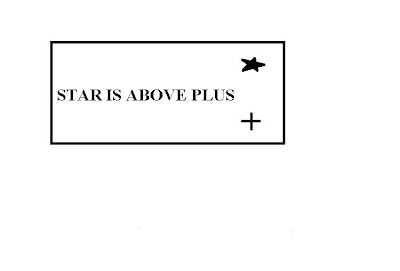
It goes without saying that complex sentences are harder to comprehend than simple sentences. Here the complexity is not in the construction of the sentence, but in the sense of the sentence. For example, a sentence that negates an assertion is harder to comprehend than one that simply asserts a proposition. This is so because the listener or reader must first presuppose a positive proposition and then negate it. The psycholinguistic researchers Clark, H.H., & Chase, W.G. in1972 established this fact through a simple experiment. They first presented the picture with a star, a plus and a statement. Then they presented the following four sentences:
  1. The star is above the plus.
  2. The plus is above the star.
  3. The plus is not above the star.
  4. The star is not above the plus.

After presentation of the sentences the comprehension time was measured. The participants took more time to comprehend the falsity in the sentences 2 and 4. Also they found that the participants took more time to comprehend the sentence 3 which is true but in a twisted manner, than the sentence 1 which is true affirmative and so very simple.
Polysemy
Polysemy is the property of language that a single word can have more than one meaning. When a reader encounters word with more than one interpretation special cognitive process is required for comprehension. Homonyms and metaphors illustrate the problem that Polysemy poses for comprehension.  For example the word watch has more than one meaning. Illustration: I like the watch. I like to watch. When one reads the first sentence the second meaning is actively suppressed by a special cognitive process. But this cognitive process of suppression of other meanings of the word is supported by the context and syntax. If the context fully supports the cognitive process there may be delay in comprehension.
Example: the word quack has two meanings. One meaning refers to an unqualified medical practitioner and the second meaning indicates the sound of a duck. Consider this sentence: Sam was treated by a quack. The second meaning, the sound a duck, is actively suppressed. Only one meaning of the homophone is supported by the context. But when the context fails to bias a specific meaning both meanings may remain active for long time and comprehension is delayed. Example: Sam was annoyed by the quack.
Similarly, to comprehend a metaphor one must ignore or suppress the literal meaning of words in order to grasp the intended meaning.  Examples: Time flies. Untrammeled imagination. Words in a text must be actively interpreted because they can have more than one meaning. In comprehending metaphors the nonliteral meaning—not the literal meaning—must be activated.

Minggu, 22 Januari 2017

How to Disarm a Borderline Last Part


Before reading this post, particularly if you are going to try this at home with a real adult family member with borderline personality disorder (BPD) (which is not recommended without the help of a therapist), please read my previous posts Part I (October 6), Part II (October 29), Part III (November 24), Part IV (December 8), and Part V (January 12), Part VI (March 2), Part VII (April 30), Part VIII (June 5), and Part IX (August 2). The countermeasures described in this post do not work in isolation but must be part of a complex, consistent, and ongoing strategy.

This post, the last one in this series, will continue to describe specific countermeasures to the usual strategies in the BPD bag of tricks used by them to distance and/or invalidate you, as well as to induce you to feel anxiously helpless, anxiously guilty, or hostile.


Today's subjects are what to do when none of the previous interventions seem to decrease the angry responses of the family member with BPD, and what to do when you yourself blow your cool and react with a nasty comment that might kick off a variable intermittent reinforcement schedule than can undo all the fine work you have done until this point..

When all the suggestions in these posts fail

The next suggestion is useful in cases in which, no matter what you say, the family member with BPD continues to escalate with more and more outrageous accusations or oppositionalism. It only works when all others have failed, and not before.  It probably can be used only once or twice. The reason for this is, in order for you to be confident in the assumption you are about to make, the Other's negative patient behavior must have already persisted in the face of your consistent efforts to be conciliatory.


The Solution? Inquire, "Why are you picking a fight with me?"  Once again, you have to refuse to get sucked into a debate about whether or not the family member with BPD is indeed picking a fight.  It will have by this point become damn obvious, and therefore you do not have to prove it.

In response to this question, people with BPD will usually do one of two things.  First, they could conceivably stop the behavior, admit that they are picking a fight, and begin to explain why they feel it necessary to do so.  In the unlikely event that this happens, hear them out!  You will probably learn something important about your relationship.  Try not to be defensive but look for the kernal of truth in what they are saying, as described in Part IV of this series.

More usually, they may suddenly stop the provocative behavior and go on to talk about some other, completely different subject, and nicely proceed as if the fight had never even happened! In this scenario, the family member with BPD suddenly drops whatever he or she was complaining about right in the middle of a heated interaction. 

This maneuver is a lot trickier than you might think.  Because of the abrupt nature of the change in subject, you may feel drawn back into continuing the previous angry discussion yourself.  This happens because the interaction that preceded the switch feels unfinished.  You should remind yourself that the Other's goal may just have been to keep an argument going, not to settle any actual complaint or win an argument.  In other words, the actual content of the argument may be something that is somewhat unimportant.

The feeling that one gets after an argument is suddenly dropped is somewhat akin to the way one feels in the following situation: you have repeatedly tried to get a talkative friend off the telephone.  You know, those conversations when you've said several times that you'd love to talk longer but you have to go, and your friend says OK after each time, but then keeps on talking as if you had not said anything at all. Finally, you raise your voice and firmly say, "I really have to go!" In response, the friend angrily says, "OK, GOODBYE!" 

The natural response is "No, wait!" even though ending the conversation had been one's goal in the first place! 

I advise you to resist the temptation to re-ignite whatever fight had been taking place before you asked the question concerning why the family member was picking a fight, and move on to whatever new and friendlier topic the Other has chosen.  Just like your partner in conversation, act as if the earlier argument had never even taken place.

The fine art of apology

The last bit of advise on disarming someone with BPD concerns the situation in which the family member with BPD gets the best of you and you react with a statement or action that invalidates or insults the patient.  Despite being well versed in the kinds of interventions described in this series of posts, you may still find yourself responding poorly to a family member's provocations. 

The person with BPD, after all, has a lifetime of experience in creating these reactions.  Unfortunately, intermittent emotional overreactions from another tend to make such a person try even harder and longer to illicit said reactions. This is due to the variable intermittant reinforcement process desribed in Part I of this series of posts.

Solution:  After you and your targeted other have calmed down, own up to your mistake and apologize for it!  Be a person of integrity. Be someone who is responsible, has a sense of right and wrong, and is the sort of person other people can look up to.


Having said that, however, an effective apology in this situation should not have the slightest hint of self-denigration attached to it.  If you put yourself down in some way, the person with BPD may then go for your jugular in response.  Basically, there are two characteristics this kind of apology should always have:

First, be good-natured about your error.  After all, you are only human.  Be able to laugh at yourself.  Say, "Gee, I sure did get frustrated with you that time."

Second and most important, apologize only for what you actually said or did, but not for the feelings that led to it.  Example: "I am sorry for sounding so critical, but I just had the feeling that you were dismissing everything I said out of hand."

This sort of statement frames the former explosive interchange as a mutual problem that the two of you need to work on solving in a constructive manner.   And after all, solving interpersonal problems is what effective metacommunication is all about.