Tampilkan postingan dengan label book. Tampilkan semua postingan

Sabtu, 19 Agustus 2017

RELIQUARY The book that got me through 2015


I don't usually share personal stuff, but I think now is the time.

Yesterday, Reliquary, my latest adult novel, was published. It's an urban fantasy with hints of erotic romance, and writing it (and the other books in the series, all of which I wrote last year and will be published over the next few months) helped get me through one of the toughest periods in my life thus far.

I experienced four major life stressors in 2015. My marriage ended. I had to leave the job I'd had for ten years and dearly loved. I moved from the home I thought I'd grow old in. And one of my children was diagnosed with what will be a lifelong medical condition that requires constant monitoring and intervention (Type 1 diabetes). I am fortunate to have friends and family who love me dearly and support me unconditionally, but even so, I'm gonna be honest--I'm okay now, and much happier than I was, but there were times last year when I thought I was going to crater.

Reliquary was the story that came to me as I walked through the painful early days of 2015, and telling it carried me through the weeks and months that followed. The series is about Mattie, a woman who thinks she has the life she wants, and then is forced to choose between her safe, predictable small-town world and the much bigger, scarier, and less certain world of magic. Her decision does not occur in one moment--it is a process that plays out through the series--and although (sadly) I don't have special powers or Asa Ward in my real life, writing the books allowed me to work through some of my own decisions.

Maybe I'm not supposed to admit that. It's all about the story, right? It has to stand on its own. (I think it does. Also, Asa Ward.) But I think writing and reading are redemptive in so many ways--they offer us a safe place to to explore our feelings, to tread paths and live out choices we cannot (or might not yet), for whatever reason, experience in our everyday lives. They give us characters and events and dynamics to bounce off of, to hate or love, to embrace or push away. When stories work, they capture moments and emotions with such intensity that they slide under our skin and into our bloodstream.

I wrote Reliquary because I needed to. I had to. It is pure escape, dark and sexy and fun, yet more psychologically real than almost anything I've yet written.

I'm so happy I get to share it with you.


Mattie Carver’s engagement party should have marked the start of her own personal fairy tale. But when her fiancé, Ben, is violently abducted the next morning, her desperate quest to find him rips her away from small-town life and reveals a shattering truth: magic is real—and Ben is hooked. It’s not the stuff of storybooks. It’s wildly addictive, capable of producing everything from hellish anguish to sensual ecstasy almost beyond human endurance.
Determined to find out who took Ben and why, Mattie immerses herself in a shadowy underworld and comes face-to-face with the darkly alluring Asa Ward, a rogue magic dealer, infamous hustler…and her missing fiancé’s estranged brother. Asa has the power to sense magic, and he realizes Mattie is a reliquary, someone with the rare ability to carry magic within her own body, undetected. Asa agrees to help find Ben on one condition: Mattie must use her uncommon talent to assist his smuggling operations. Now, from magic-laced Vegas casinos to the netherworld clubs of Bangkok, Mattie is on a rescue mission. With Asa by her side, she’ll face not only the supernatural forces arrayed against her but the all-too-human temptation that she fears she can’t resist.


Jumat, 11 Agustus 2017

Panic attack book


Panic attack book will be fad from the present widely used articles and other content, we realize from your examination with the search results every single child provide exact data everyone have a go with find visuals regarding any Panic attack book . as well as success you will notice listed below please note some of the pictures is merely a great representation.

Pictures Panic attack book


The Streets of Panic Park Goosebumps Wiki Fandom The Bone Dragon by Alexia Casale — Reviews, Discussion Books Self Employed Tax Deductions Today 1000+ images about panic! at the disco on Pinterest Hocus-Pocus Horror Goosebumps Wiki Fandom powered by Wikia Modern Surrealism Fantasy Art 3D Pictures: George Grie 3d

Panic attack book - this has been submitted with the hope what individuals you’re able to easliy publicize helpful to all of us. This article can serve as a reference when you are confused to choose the right guide The Panic attack book content could be your better alternative for being given to the effort approach, considering that it comes with its own arrange should look and feel a great deal more completely satisfied Panic attack book - Beneficial for everyone for that reason many of us making the effort to come across a trusted foundation of which can assist you to locate ideas with out distress. remember in order to save this site, for the reason that might be sooner or later you need them backside since a new inspirational strategies.


Selasa, 08 Agustus 2017

Overcoming anxiety and panic attacks book


Overcoming anxiety and panic attacks book is the trend of today's popular content, can certainly belonging to the studies belonging to the search engine optimisation that allows you to manufacture best suited points many of us try out find photographs associated with the actual Overcoming anxiety and panic attacks book . and then the good results you will discover following you should be aware many of the photographs is just an illustration.

Sample images Overcoming anxiety and panic attacks book


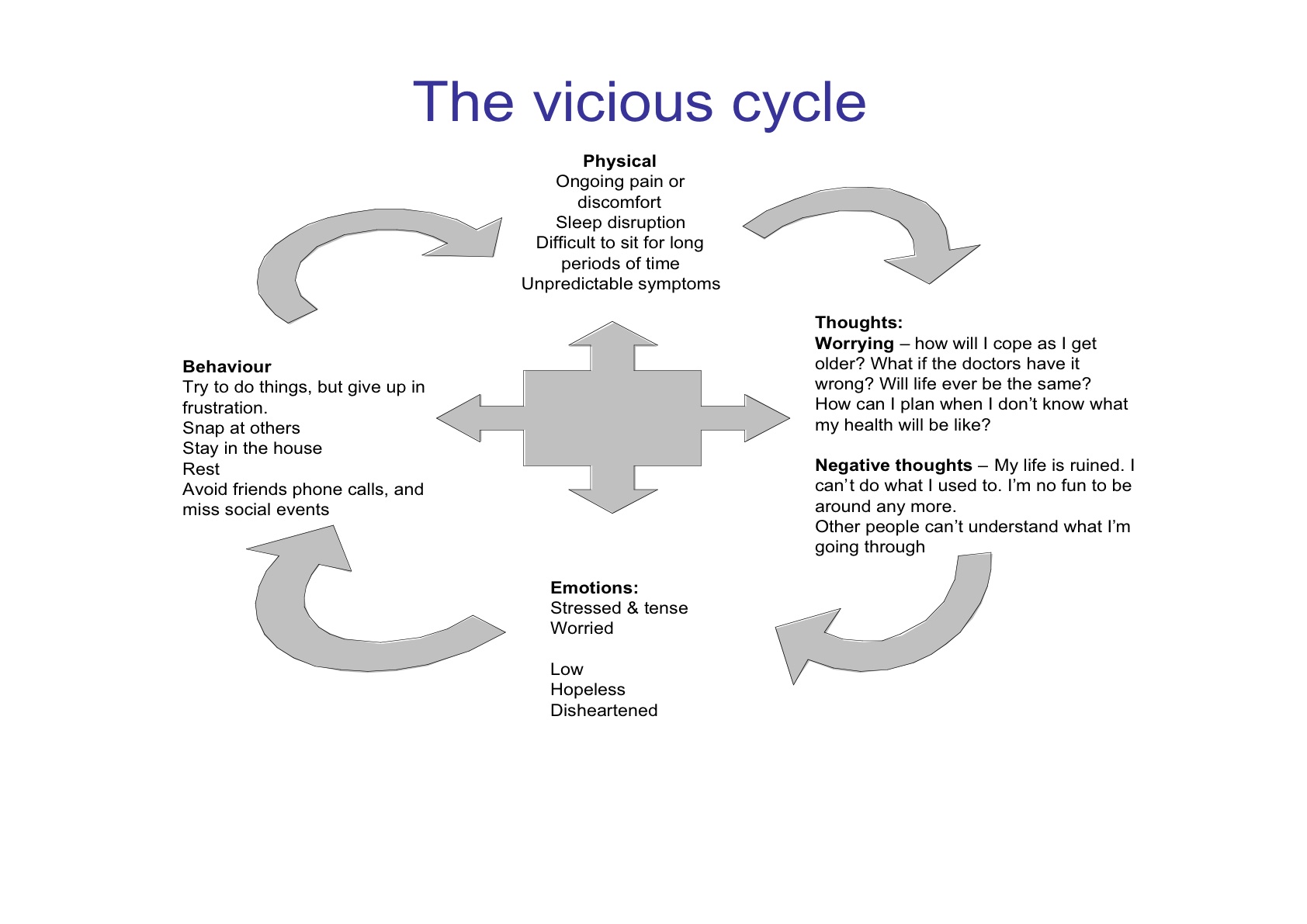
Overcoming Anxiety in 2017 Audiobook Beating Panic Attacks: 5 simple steps to FREE PDF The Anxiety and Phobia Workbook: A Step-by-Step 301 Moved Permanently Tackling Teen Anxiety - Diablo Magazine - June 2017 - East Vicious-Circle The Six Steps to Overcoming Adversity

Overcoming anxiety and panic attacks book - it's also been placed with the expectation which we're able to inspire beneficial to someone. This article can serve as a reference if you end up unclear to find the best tutorial The Overcoming anxiety and panic attacks book threads can be your easiest solution to always be utilized by the package, since it offers its strategy may really feel much more happy Overcoming anxiety and panic attacks book - Valuable suitable for you accordingly everyone are trying to look for a trusted foundation of which can assist you to locate ideas with out distress. never forget to help you store this site, considering it's possible that sometime you will have the application once again while your current inspirational concepts.


Senin, 24 Juli 2017

Dr Allens Book for Therapists about Treatment of Borderline Personality Disorder Now Available in Paperback


Now available in paperback at http://www.amazon.com/Psychotherapy-Borderline-Patients-Integrated-Approach/dp/1138012750/ref=mt_paperback?_encoding=UTF8&me=

Minggu, 23 Juli 2017

Book Review How Not to Be Wrong by Jordan Ellenberg


A while back (11/2/11) I reviewed the book Stats.con by James Penston. That book discussed how the statistics used in randomized clinical trials can be highly deceptive. How Not to be Wrong also covers some aspects of statistical misuse, in more detail, and certainly in a much more entertaining way. Some of his comments are funny as hell. 


Jordan Ellenberg

Consider the widespread use of a statistic call the p value, which estimates the probability that the result of a study could have just been a chance coincidence rather than an actual meaningful finding. A study is generally considered positive if the p value is 5% or less.

5% is of course not 0%. There is a one in twenty probability that the study results that are deemed positive were in fact negative. But what happens if journals only publish the positive studies and not the negative ones, when there might be a large number of negative studies, and when the positive study results are not reproduced (replicated) in a second study? Well, people start believing things that are not true, that's what.

The reason for this is because, as the author points out, improbable things actually happen quite frequently. Especially if you do lots and lots of things – like experiments. 

Another issue he mentions is that, if your sample size is too small, the chances increase dramatically that one of your subjects will be an outlier that dramatically but artificially changes the average for whatever characteristic you are measuring. With a small sample, you are more likely to get a few extra prodigies or slackers in a study of people's ability to perform certain tasks. A famous example: if Bill Gates walks into a bar with a few other people, the average guy in the room is a billionaire.  

Here’s how the author starts out a discussion of the p value problem (pages 145-46) :

"Imagine yourself a haruspex; that is, your profession is to make predictions about future events by sacrificing sheep and then examining the features of their entrails...You do not, of course, consider your predictions to be reliable merely because you follow the practices commanded by the Etruscan deities. That would be ridiculous. You require evidence. And so you and your colleagues submit all your work to the peer-reviewed International Journal of Haruspicy, which demands without exception that all published results clear the bar of statistical significance.    
      
Haruspicy, especially rigorous evidence-based haruspicy, is not an easy gig. For one thing, you spend a lot of your time spattered with blood and bile. For another, a lot of your experiments don't work. You try to use sheep guts to predict the price of Apple stock, and you fail; you try to model Democratic vote share among Hispanics, and you fail…The gods are very picky and it's not always clear precisely which arrangement of the internal organs and which precise incantations will reliably unlock the future. Sometimes different haruspices run the same experiment and it works for one but not the other — who knows why? It's frustrating…
      
But it's all worth it for those moments of discovery, where everything works, and you find that the texture and protrusions of the liver really do predict the severity of the following year's flu season, and, with a silent thank-you to the gods, you publish
      
You might find this happens about one time in twenty.
      
That's what I'd expect, anyway. Because I, unlike you, don't believe in haruspicy. I think the sheep's guts don't know anything about the flu data, and when they match up it's just luck. In other words, in every matter concerning divination from entrails, I'm a proponent of the null hypothesis [that there is no connection between the sheep entrails and the future]. So in my world, it's pretty unlikely that any given haruspectic experiment will succeed.
      
How unlikely? The standard threshold for statistical significance, and thus for publication in IJoH, is fixed by convention to be a p-value of .05, or 1 in 20... If the null hypothesis is always true — that is, if haruspicy is undiluted hocus-pocus —then only one in twenty experiments will be publishable.
      
And yet there are hundreds of haruspices, and thousands of ripped-open sheep, and even one in twenty divinations provides plenty of material to fill each issue of the journal with novel results, demonstrating the efficacy of the methods and the wisdom of the gods. A protocol that worked in one case and gets published usually fails when another harupex tries it, but experiments without statistically significant results do not get published, so no one ever finds out about the failure to replicate. And even if word starts getting around, there are always small differences the experts can point to that explain why the follow-up study didn't succeed."

The book covers many subjects about which the non-mathematically-inclined can learn to think in a mathematical way in order to avoid coming to certain wrong conclusions and to zero in on correct ones. Many of these, however, are irrelevant to this blog – the chapters on lotteries come to mind. I of course found those parts a bit less interesting. But the chapters relevant to medical studies are so right on.

Another important topic the author covers is known mathematically as regression to the mean. This phenomenon can lead, as examples, to overestimates about the genetic component of human traits and explains why fad diets always seem to work at first but then later on everyone seems to forget about them. As mentioned, when you average any measurement applied to human beings, the averages can be deceptive.  

In addition to the sample size considerations described above, you can get into trouble if you start with a sample that contains people who are higher or larger on average on the relevant variable that the average person in the general population.

If two tall people marry, their progeny will usually be, on average, tall compared to others in the general population. However, they are not all that likely to be taller than their parents. As Ellenberg states, “…the children of a great composer, or scientist, or political leader, often excel in the same field, but seldom so much as their illustrious parents” (p. 301). Their heredity mingles with chance environmental considerations, and pushes them back toward the population average. That is the meaning of regression to the mean.

To understand this, think about those who embark on weight loss diets. One needs to consider the fact that most people’s weight tends to fluctuate a few pounds either way depending on a lot of chance factors, such as their happening by an ice cream truck. And when are people most likely to start a diet? When their weight is at the top of their range! So by the law of averages, they are probably in many instances going to lose weight whether they diet or not. But when they do diet, guess what happens? They attribute the loss to the fantastic new diet!

I can not say for certain, but I wonder if studies on borderline personality disorders (BPD) yield misleading results because of regression to the mean. Long term follow-up studies on patients with the disorder seem to indicate that it seems to go away after a few years in a significant percentage of subjects. This finding is misleading, however, when you look closer. 

To make the BPD diagnosis, the subject needs to exhibit 5 of the 9 possible criteria. Many of the "improved" subjects merely went from 5 criteria down to 4 of them, and were therefore not diagnosed with BPD any longer. Actually, they became just what we call "subthreshold" for the disorder. Their problematic relationships, however, were still pretty much the same.

These results could mean that subjects with BPD may naturally vacillate between meeting criteria for the disorder and being subthreshold, or between exhibiting a high number of the criteria and a lower one. Which would mean that if they qualified for the diagnosis at the beginning of the long term follow-up study, a significant proportion of the long-term study subjects were at their worst. If so, the study results may indicate regression to the mean, and therefore say nothing else significant about the long term prognosis for the disorder.

Other important statistical issues the author discusses clearly and brilliantly include assumptions that two variables are related in a linear fashion when the are not (non-linearity - cause and effect relationships that are not based purely on an increase in one variable always leading to either an increase or decrease in another); torturing the data until it confesses (running multiple tests on your study data, controlling for different things, until something significant seems to pop up); and the following problem inherent in studies designed to see if two things like being married and smoking are correlated: 

"Surely the chance is very small that the proportion of married people is exactly the same as the proportion of smokers in the whole population. So, absent a crazy coincidence, marriage and smoking will be correlated, either positively or negatively."

Any one who is serious about critically evaluating the medical literature owes it to themselves to read this book.

Rabu, 31 Mei 2017

Book Review High Price by Dr Carl Hart A Life and the Lies in Drug Abuse Research


For a long time I have been critical about conclusions drawn from animal experiments which purported to be models for addictive behavior with drugs in humans. In particular, I got annoyed hearing over and over about how rats and rhesus monkeys would press levers to get cocaine, heroin, or methamphetamine compulsively, even until they died, choosing drugs over even food and water. These experiments were touted  incessantly by so-called experts. As I mentioned in a previous post, the head of the National Institute for Drug Abuse, Dr. Nora Volkov, even had the nerve to say that rats and humans could have the same phenotype!

My usual response to this was that rats and monkeys do not know about the damage the drugs might do to them, but that humans do, and that makes the comparison ridiculous if not completely preposterous. Furthermore, if a monkey experienced the “crash” that followed stopping cocaine or meth, it would not know that the crash was due to the drug, only that the drug stopped the crash.  And scientists even STILL have had no luck in finding rats who hide bottles of alcohol.

As it turns out, these points, while probably valid, are only minor considerations in determining the lessons to be learned from these animal studies. A far bigger issue was that the experiments were not even accurately or honestly described by those touting them. In an outstanding new book called High Price by African-American neurospsychologist Carl Hart, a faculty member at Columbia University, the author points out that descriptions of the environments in which the animals were kept were completely missing from the descripions, but that environmental factors were key in determining animal drug use behavior.

Dr. Carl Hart

The animals in these experiments were essentially kept in solitary confinement, as they had throughout most of their lives, and had nothing else to do but push the lever!  If they were instead placed in an enriched environment with alternatie activities available and other animals with which to socialize, their “drug-seeking” behavior changed drastically.

A series of experiments that the drug warriors don't want you to know about were conducted in the 1970s, and known as Rat Park. Researchers allowed two groups of rats to self-administer morphine. They housed the first group in stark cages, one rat to a cage. They placed the second group in an “enriched environment,” which offered opportunities to burrow, play, and copulate. The isolated rats drank 20 times more morphine-laced sugar water than those enjoying the Rat Park. These results have been reproduced using both cocaine and amphetamine.

Dr. Hart points out that if you were held in solitary confinement with just one movie to watch, you might watch it over and over. That would not prove that the movie itself was addictive!  In people, when they have appealing alternatives, they often do not choose to take drugs in a self-destructive manner.

Add to the mix of misinformation about drug abuse is the unheralded but monumental effect of racism on both drug use and the prevailing ideas about it.  Legal bans on certain drugs (and not others) were legislated after widespread reporting of highly exaggerated horror stories about drug use by a despised minority:  crack cocaine by Blacks, marijuana by Blacks and Mexicans, methamphetamines by toothless "poor white trash" in Appalachia, and opium by Chinese railway workers. No one was immune from these cultural influences and myths, including the minorities themselves. The Black Caucus in the United States Congress was, originally, solidly behind the huge and unfair differences in the length of jail sentences for people convicted of using crack vs. powdered cocaine, the effects of which drugs are physiologically identical.

Some facts:  The problems in the black urban community attributed to crack were already prevalent well before crack was even introduced. The vast majority of illegal drug users do not become addicted or even psychologically dependent on the drug. Among addicts, half are employed full time. Violent convicts in jails are less likely to abuse drugs than other prisoners. The vast majority of homicides do not involved drug use, and alcohol is probably the worst offender among those that do. Dealing crack is only about as profitable as working at McDonalds for low level dealers. Few people who abuse drugs take only one drug, yet there are very few studies of the effects of combinations of drugs. Self reports from addicts who are asked about their cravings for the drugs do not predict whether or not an addict in recovery will relapse.


Adderall and Methamphetamine are nearly identical molecules with identical effects, yet drug manufacturers go out of their way to say that those children treated with stimulants for “ADHD” are no more likely to go on to abuse drugs than anyone else.  Of course, since their drugs are already being legally provided to them by physicians, they have no need to obtain them from illegal sources, which is one of the measures the experts use to measure drug abuse!

This kind of circular reasoning in the literature abounds. In a series of experiments with rhesus monkeys, Dr. Hart reports, “…researchers found that the animals’ choice to use cocaine is reduced to the size of the food reward they are offered as an alternative.” People are now using this data to claim that junk food is as addictive as cocaine, when initially cocaine was claimed to be “…especially addictive because animals preferred  it to food when hungry.” (p.93).

The book by Dr. Hart is especially eye opening because it combines discussions of this sort of pseudoscience with the author’s explorations about his own personal story. As an African-American having grown up in an inner city in which many of his friends and relatives did poorly and got into drugs and crime, he asks himself why he not only escaped this but became an Ivy League professor and an expert. The experiences of this black man in America shines a bright light on the real causes of self destructive behavior. It is not drugs.

The following graphic is not discussed in the book, but, with what we know about the havoc that a felony conviction and hanging out with convicts for months or years can create in the lives of young men, it is clear that far more harm is inflicted on drug users by the laws against drug use than by the drugs themselves.


By the way, do you know how to abuse drugs? You hold them in your hand and scream at them, “You worthless pile of sh*t!  You call that a buzz?? You suck!” You then throw them to the ground and stomp on them. 

Yeah, it’s the self that’s being abused by addicts, not the drugs. 

You owe it yourself to read this highly engrossing and informative book.


Sabtu, 06 Mei 2017

Book Deal News FACTORY GHOST AKA That thing I wasnt supposed to write but did


This is a bit surreal.

In the fall of 2011, things were a bit hectic. I had the deal for SANCTUM, and I was smack-dab in the middle of writing the sequel. In September, I interrupted that project to write the partial for SCAN that went on submission in October.

I write to cope. And when I'm on sub, I cope hard. Once SCAN was with editors, I needed to stay busy, even though I knew that if it was acquired, I'd need to write the rest of the book on a very tight deadline. But for some reason, I didn't feel like immediately jumping back into Sanctum2 once I'd taken a break with it.

Aaaaand then I got an idea. Sneakily, guiltily, I wrote a few chapters. I sent them to Brigid Kemmerer, because she is very honest and frank (on top of being a brilliant writer), and I knew she'd slap me upside the head if I was getting involved in a project that was a total waste. But she got back to me quickly and basically said "GO GO GO!"

So I went went went, and three weeks later, FACTORY GHOST was finished. It's sort of like Phantom of the Opera meets Upton Sinclair's The Jungle, set in a fictional Asian society. Writing it was intense to say the least. But I'm *really* proud of it. And yesterday evening, this came out in the Publishers Weekly Children's Bookshelf:

Ruta Rimas at Margaret K. McElderry Books has acquired at auction Sarah Fine's Factory Ghost, a gothic YA novel about a 16-year-old girl who moves in with her father, the resident doctor for the town's slaughterhouse, and discovers that the myth of the factory ghost may not be a myth at all. Publication is set for winter 2014. Kathleen Ortiz of New Leaf Literary & Media did the two-book deal for North American rights.
Thank you, Brigid, for encouraging me to write this book even though the timing was all wrong. Thank you, Kathleen, for not freaking out (out loud, at least) when I told you I was writing another book instead of the books that were already under contract (and for supplying the color coded schedules to make sure I don't miss any of my deadlines. And for, you know, selling my books). Thank you, Ruta, as well as the entire McElderry team, for being so enthusiastic about this story.

And thank you, blog friends, for being part of this with me. I am so, so fortunate to be part of this community.

Selasa, 07 Maret 2017

Scary as Shit Childrens Book Illustrations Part 1


For Christmas, Santa has brought you menacing stuffies with blood-red eyes. Plus, they are infested with rodents.

"Hello Jibboo! Have we met before in another creepy, dark alley?
Why do you peck me in the duodenum with your awful beak?"

Greetings! Is this the hindquarters of the Pickle Creature, or its forequarters? Either way, it's damnably happy!

"Dance, monkey, dance!" chortled lascivious old Grandfather Bunny. And the bunnies leapt to his foul command.

"Enter my lair and feast on my trotters! Mwa-ha-ha-ha!"
(The Party Pig would have been an awesome blog name. Damn!)

"Then there were dolls—dolls with blue eyes and yellow curls,
dolls with brown eyes and brown curls,
and the funniest little toy clown you ever saw...."

"Kill, kill, KILL!"

"Mmm, what up, Danny Beaver? It's so hot, Danny Beaver," groaned Rabbit. "Come sit in the grass with me. You like my fluffy white tail? You wanna get you summa that? Maybe you like a lick-a my ice cream? "

"My nice monkey friends skinned me! I will now watch my skin dangling from a telephone wire. That's really weird."