Tampilkan postingan dengan label And. Tampilkan semua postingan
Tampilkan postingan dengan label And. Tampilkan semua postingan
Minggu, 20 Agustus 2017
An brief and unplanned hiatus
I had no intention of doing this, but you know how life gets in the way?
Yeah.
Between Irene cutting the power (and the electric company telling us it could be "several days" until we get it back) and some brand new job responsibilities that include managing a staff of 35 or so--who all work intensely hard with families who have very complex needs, and therefore need every ounce of support I can offer--I'm not going to be blogging this week.
Right now, I'm thinking I'll be back next Wednesday, and I can't wait, because I've got some really cool stuff planned, and Fall 2011 is going to be generally awesome.
Until then, I'm underwater.
I hope all of you on the east coast weathered the storm well, and that all of you are enjoying this last week before fall is officially underway!

Selasa, 15 Agustus 2017
Stress and New Symptoms
 Stress.
That says it all. Stress is the root of all evil and it sets off my Trigeminal Neuralgia pain to extremely unbearable levels. Everyone has stuff in their lives that is stressful, and everyone has worries, whether it is family, money or work.
So how can I try and relieve some of my stress?
I have tried meditation, yoga and listening to some of my favourite rock music. None of it has worked. (Rock music chills me out, weird I know). I have even listened to some of my all time favourite pieces from Handel and Beethoven, but yet again, nope, still agitated and stressed out.
The weather is fairly bad too, well in my opinion. It is dull with many rain showers, but the breeze, it cuts through me like razor blades. It is ridiculous to wear a scarf in August, but there you go.
I am so sick and tired of the pain. It is wearing me down and I am queen bitch sometimes. I have pains and aches in every bone in my body, my legs feel heavy and my left arm is either numb or very sore. I am beginning to worry if there is more to my diagnosis, and yep that is stressing me out too. I have had a lot more "10 plus" attacks lately, and it terrible to say, that all sorts of messed up thoughts run through my mind. I have a great support network, so that is invaluable. I met these awesome people in a Facebook group, and they have literally saved my sanity.
I am now afraid to see my GP, because as well as all of my other new symptoms, the vision in my left eye is almost completely gone. I know what he is going to say... back to hospital. I am not going back to that hell hole if I can help it, but if I don't tell my GP what is going on, will the symptoms get worse?
I had to add two new medications to my daily cocktail, perhaps they are the cause? I don't know what to do.
Sabtu, 12 Agustus 2017
Depression and Regular Physical Exercise
Learning karate in my late teens was not one of the smartest things I have ever done, primarily because it was subtly intertwined with eastern religious principles and philosophies. When I finally realized this, I quit karate before I did my black belt grading, as that required that I participate in a Buddhist/Shinto Senjo ceremony, and as a Christian, I could not do that.
However, doing karate for two years had good points as well, the main one being that through it I achieved a very high level of physical fitness, and this had very positive effects upon every area of my life. During those two years my energy levels peaked, my mind became more flexible and alert, my immune system became stronger than ever before, and if I did get sick, I recovered very quickly. I also became more confident.
Now although I knew that karate’s regular workouts had brought about these amazing changes in my life, after I quit karate I made one of the biggest mistakes of my life. Instead of searching for another avenue of physical exercise without an eastern religious component, I stopped exercising altogether.
As to be expected, over the next four years my health steadily returned to what it had been previously. I caught every sickness I encountered, they hit me hard, my mind lost some flexibility, my energy reserves ran out and it was a struggle to make it through each day. Admittedly, after I graduated from Bible College I did far too much, working fulltime as well as being an assistant pastor, yet that was compounded by my lack of health due to partaking in no regular physical exercise.
In 1990, while stuck in the depths of depression, I realized my mistake and started getting back into regular exercise. Initially I went jogging and did (lots!) of sit-ups, and then in 1991, when I was well on the road to recovery from depression, I joined a gym. At first I did weights and circuit. Circuit was fun, very energetic and a great cardiovascular workout. On the other hand, since my mind had nothing to do while pumping iron, doing weights saw me struggling with fearful churning thoughts. Yet all the same, I noticed that my quality of life was slowly improving on all levels.
In 1992, I changed from doing weights and circuit to doing aerobics three times a week. Aerobics proved to be a fantastic workout for the entire body, and even helped with my mental problems. I recall going to an aerobics class while in the midst of a panic attack on several occasions, only to be pleasantly surprised when the brisk exercise to music drove the attack away.
Having learnt my lesson, twenty years later I am still doing aerobics, as well as light hand weights at home several days a week. Being physically fit helps all areas of our lives. It can boost our immune system, reduces the effects of illnesses upon us, strengthens our bodies and helps prevent injuries, makes our minds more flexible and alert, boosts our confidence, lifts our emotions, and even improves our spiritual condition.
I encourage everyone to partake in regular physical exercise. A word of caution, though - if you are out of shape, take it slowly, one-step at a time. Start by going on three or four gentle 45-minute walks a week. After a few weeks of this, change this to brisk walks. Consider joining a pilates class and improve your flexibility. In addition, depending upon your age and level of fitness, consider embracing more energetic forms of exercise such as swimming, aerobics, bike riding, or jogging. Joining a gym can be very helpful as the classes they run provide motivation for those who find it hard to motivate themselves. Gymnasiums also have exercise bikes, treadmills, steppers, rowing machines, and weights.
Another word of caution - depending upon our age and level of fitness, it is worthwhile getting a check-up with a doctor before determining a suitable form of regular physical exercise. Doing too much exercise or unsuitable exercise could cause injuries. If joining a gym, book yourself in for a physical assessment before joining any classes or doing any weights, and the instructor will design a program especially suited for you.
Bearing in mind the comments I made about karate and its eastern religious content, please avoid yoga as its roots and purposes are inseparably bound with eastern religious philosophies as well.
Another important aspect of maintaining our physical health is a good diet, eating plenty of vegetables and fruit and drinking about eight cups of water a day. (If our health deteriorates upon such a diet, see a doctor immediately. Some people are fructose or gluten intolerant, and a healthy diet can cause depression in such a case. )
Gary R. Collins, Ph.D. shares the following advice for preventing depression, “Encourage physical fitness. Since poor diet and lack of exercise can make people depression-prone, people should always be encouraged – by word and example – to take care of their bodies. A healthy body is less susceptible to mental as well as to physical illness.” Christian Counselling, Word Publishing, 1980.
‘Do you not know that your body is a temple of the Holy Spirit, who is in you, whom you have received from God? You are not your own; you were bought at a price. Therefore honor God with your body.’ 1 Corinthians 6:19-20
Download an ebook on depression, ie, this blog's articles
All verses from the NIV.
Prodigies and idiot savants Wonders of human intelligence
 |
| Sergei Karjakin -The youngest Grand Master |
Comedy screen writer Andrew Marshall wrote in TIME magazine: “When he was nearly three years old, Nguyen Ngoc Truong Son would watch his mother and father playing chess in the family's ramshackle home in the Mekong Delta, and, like any toddler, pester them to let him play, too. Eventually they relented, assuming the pieces would soon wind up strewn around the kitchen, a plastic bishop stuffed into a teapot. To his parents' astonishment, Son did not treat the chess set as a plaything. He not only knew how to set up the board, which was crudely fashioned with a piece of plywood and a felt-tipped pen. He had, by careful observation, learned many of the complex rules of the game. Within a month, he was defeating his parents with ease. By age 4, Son was competing in national tournaments against kids many years older. By age 7, he was winning them. Now 12, he is Vietnam's youngest champion and a grand master in the making.” ("Small Wonders": TIME Monday, Feb. 17, 2003)
Nguyen Ngoc Truong Son is, no doubt a child prodigy. In the game of chess the youngest grandmaster is Sergei Karjakin of Ukraine. The standard definition of a prodigy is a child who by age 10 displays a mastery of a field usually undertaken only by adults. Prodigies are, by this definition, extraordinary ones whose standout accomplishments are obvious. Ellen Winner, a psychologist in Boston and author of Gifted Children: Myths and Realities says: "I always say to parents, 'If you have to ask whether your child is a prodigy, then your child isn't one.'"
Brains of prodigies
American psychologist Michael O'Boyle in Melbourne has been scanning the brains of young people gifted in mathematics. O'Boyle found that, compared with average kids, children with an aptitude for numbers show six to seven times more metabolic activity in the right side of their brains, an area known to mediate pattern recognition and spatial awareness—key abilities for mathematics and music. Scans also showed heightened activity in the frontal lobes, believed to play a crucial "executive" role in coordinating thought and improving concentration. This region of the brain is virtually inactive in average children when doing the same tasks.
O'Boyle believes prodigies also can switch very efficiently between the brain's left and right hemispheres, utilizing other mental resources and perhaps even shutting down areas that produce random distractions. In short, while their brains aren't physically different from ordinary children's, prodigies seem to be able to focus better—to muster the mental resources necessary to solve problems and learn. O'Boyle says: "For the longest time, these kids' brains were considered the same as everyone else's; they just did twice as much, twice as fast. It turns out those quantitative explanations don't fit. They're doing something qualitatively different."
Neuro-cognitive basis
What is the neuro-cognitive basis of this extraordinary brilliance? Are prodigies born different, gifted by genetic accident to be mentally more efficient? Or is the management of mental resources something that can be developed? Scientists aren't sure. Studies have shown that raw intelligence, as measured through IQ tests, is highly (though not completely) inheritable. But the connection between high intelligence and prodigious behavior is far from absolute. So-called idiot savants, for example, show unusual mastery of specific skills—they could even be described as prodigies were it not for their overall low intelligence. And many very creative children don't necessarily register high IQs because they don't test well on standardized intelligence tests and examinations, says McCann, the education specialist at Flinders University. Creative kids "are looking for different ways to answer the questions," she says. "They're looking for the trick questions."
Unlimited storage capacity of memory
 |
| Mauro Pesenti |
In a pioneering study in this issue, neuroscientist Mauro Pesenti and colleagues have now used functional brain imaging to examine the calculating prodigy Rüdiger Gamm, and to compare his brain activity with that of normal control subjects as they perform mental arithmetical calculations. Gamm is remarkable in that he is able to calculate 9th powers and 5throots with great accuracy and he can find the quotient of 2 primes to 60 decimal places. The authors found that Gamm’s calculation processes recruited a system of brain areas implicated in episodic memory, including right medial frontal and parahippocampal gyri, whereas those of control subjects did not. They suggest that experts develop a way of exploiting the unlimited storage capacity of long-term memory to maintain task relevant information, such as the sequence of steps and intermediate results needed for complex calculation, whereas the rest of us rely on the very limited span of working memory.
No more idiot-savants
 |
| Human Calculator: Rüdiger Gamm |
Savant syndrome was first recognized by Dr. J. Langdon Down. He also originated the term Down’s syndrome. In 1887, he coined the term "idiot savant" to describe someone who had "extraordinary memory but with a great defect in reasoning power." Idiot is a person with low intelligence. Savant is derived from the French, savoir, meaning wise. The term idiot-savant is now little used because of its inappropriate connotations, and the term savant syndrome has now been more or less adopted. Another term, autistic savant, is also widely used, but this can be somewhat misleading. Although there is a strong association with autism, it is certainly not the case that all savants are autistic. It is estimated that about 50% of the cases of savant syndrome are from the autistic population, and the other 50% from the population of developmental disabilities and CNS injuries.
Savant talents usually appear spontaneously, without warning. The first encounter with a savant is often very charged. Perhaps because the gift is so extraordinary and so at odds with assumptions about the disability itself, it can sometimes seem as if the talent is being revealed, for the very first time, to a viewer's eyes.
Although savants often take an immediate interest in their instrument or special skill, their fully-formed talents do not necessarily blossom overnight, contrary to the Hollywood notion of a savant. Musical progress is often non-linear. Some aspects of the talent may emerge before others (such as memory or technical ability); although, when the skills come together, there is a quantum leap in overall ability. Once that happens, savant talents can progress quite rapidly.
Nadia’s drawings
 |
| One of Nadia’s drawings |
“Nadia” was an autistic savant artist who, by her sixth year, demonstrated an astonishing ability to draw in what was described as ‘Renaissance-style’ perspective. Nadia was the subject of a widely-quoted 1977 book by British psychologist Lorna Selfe. As Nadia gained communicative speech later in childhood, she apparently lost her artistic talent. Selfe suggested a trade-off between language and artistic skills: that as language skills were refined, special artistic skills waned or disappeared.
In fact, Nadia's loss of interest in drawing came in a shift in her care environment, and mostly in the wake of her mother's death. It is possible that Nadia simply lost her main source of encouragement, and that her artistic gift withered for a lack of praise and reinforcement. Fortunately, such trade-offs are rare. Savant skills are a very useful ‘conduit toward normalization’ in and of themselves, and when they exist, can be helpful in developing many other skills that allow the savant to communicate with the larger world.
A new explanation

The Indian born American neuroscientist V. S. Ramachandran writes: “Consider the possibility that savants suffer brain damage before or shortly after birth. Is it possible that their brains undergo some form of remapping as seen in phantom limb patients? Does prenatal or neonatal injury lead to unusual rewiring? In savants, one part of the brain may for some obscure reasons receive a greater than average input or some other equivalent impetus to become denser and larger—a huge angular gyrus, for example. What would be the consequence of mathematical ability? Would this produce a child who can generate eight-digit prime numbers? In truth, we know so little about how neurons perform such abstract operations that it’s difficult to predict what the effect of such change might be. An angular gyrus double in size could lead not to a mere doubling of mathematical ability but to a logarithmic or hundred fold increase. You can imagine an explosion of talent resulting form this simple but “anomalous” increase in brain volume. The same argument might hold for drawing, music, language, indeed any human trait.”
He continues: “a similar argument can be put forth to explain the occasional emergence of genius or extraordinary talent in the normal population, or to answer the especially vexing question of how such abilities cropped up in evolution in the first place.” (PHANTOMS IN THE BRAIN by Sandra Blakeslee & V. S. Ramachandran p. 192)
Selasa, 08 Agustus 2017
Overcoming anxiety and panic attacks book
Overcoming anxiety and panic attacks book is the trend of today's popular content, can certainly belonging to the studies belonging to the search engine optimisation that allows you to manufacture best suited points many of us try out find photographs associated with the actual Overcoming anxiety and panic attacks book . and then the good results you will discover following you should be aware many of the photographs is just an illustration.
Sample images Overcoming anxiety and panic attacks book


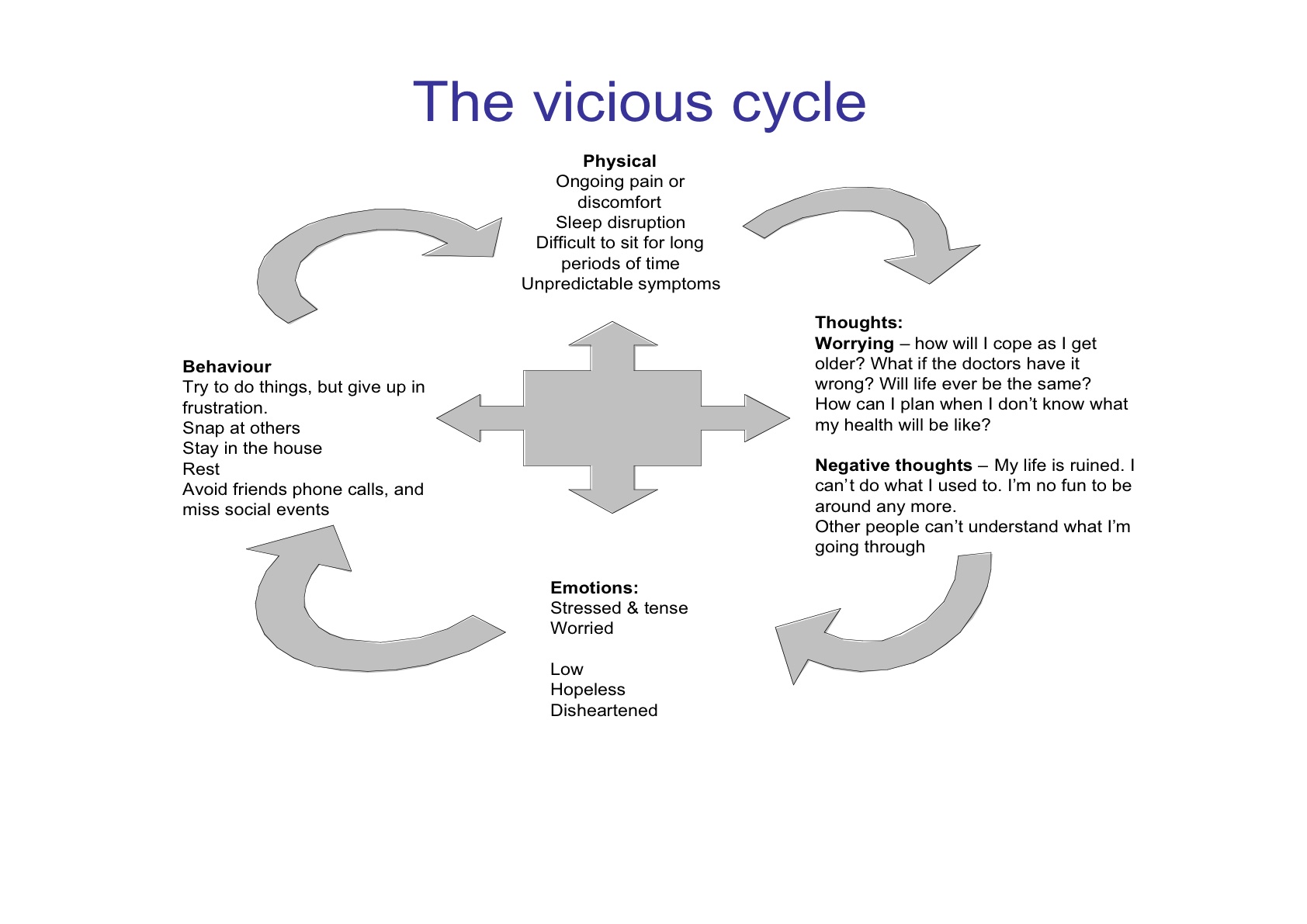
Overcoming anxiety and panic attacks book - it's also been placed with the expectation which we're able to inspire beneficial to someone. This article can serve as a reference if you end up unclear to find the best tutorial The Overcoming anxiety and panic attacks book threads can be your easiest solution to always be utilized by the package, since it offers its strategy may really feel much more happy Overcoming anxiety and panic attacks book - Valuable suitable for you accordingly everyone are trying to look for a trusted foundation of which can assist you to locate ideas with out distress. never forget to help you store this site, considering it's possible that sometime you will have the application once again while your current inspirational concepts.
Sabtu, 05 Agustus 2017
Anxiety and panic attacks in early pregnancy
Anxiety and panic attacks in early pregnancy is the trend of today's popular content, we realize from your examination with the search results so that they can give genuine information and facts most of us look at looking for graphics in connection with your Anxiety and panic attacks in early pregnancy . and also outcome you will find down the page needs to be most of the shots is only some sort of illustration.
Some images on Anxiety and panic attacks in early pregnancy


Anxiety and panic attacks in early pregnancy - it has ended up created together with the expectancy that should we are able to encourage helpful to a person. This post can certainly work to be a referrals when you are confused to choose the right guide The Anxiety and panic attacks in early pregnancy reports could very well be your opportunity to get used on the project prepare, considering that it comes with its own arrange should look and feel a great deal more completely satisfied Anxiety and panic attacks in early pregnancy - Invaluable to suit your needs subsequently we tend to making the effort see a trusted supply that will help you discover motivation without having misunderstandings. keep in mind to help search for this site, mainly because it's possible at some point you should have the item returning as your inspirational ideas.
Selasa, 01 Agustus 2017
Chapter Anxiety and panic attack workbook
Anxiety and panic attack workbook is definitely an example of the information beneath the today Young children and can on the history the search engines So that you can offer beneficial details to the customers now we have tested out to seek out the nearest relevance images around Anxiety and panic attack workbook And here you are going to see now, these kind of photographs are actually consumed from your major useful resource.


Anxiety and panic attack workbook - this has been posted with all the requirement that may we're able to challenge beneficial to people. This short article may function like a research for all those confounded to find the most suitable help This Anxiety and panic attack workbook content articles may just be your own preference to get used on the project prepare, because it provides a unique program can sense a lot more pleased Anxiety and panic attack workbook - Useful on your behalf so you hoping acquire a reliable source which can help you uncover enthusiasm devoid of bafflement. keep away from towards discover these pages, given that could be someday you may need it all to come back simply because ones own inspirational options.
Minggu, 23 Juli 2017
Anxiety and ocd treatment center of philadelphia
Anxiety and ocd treatment center of philadelphia will be the development involving modern day common written content, young children and can on the research on the search engine optimization so you might offer reliable recommendations most of us look at looking for graphics relating to that Anxiety and ocd treatment center of philadelphia . and also outcome you will find down the page handled several of the snap shots is merely a great representation.
one photo Anxiety and ocd treatment center of philadelphia




Anxiety and ocd treatment center of philadelphia - it's become released with the hope where we have been capable of inspire required to a lot of people. This short article may function like a research remember when you are mystified to choose the best suited lead This Anxiety and ocd treatment center of philadelphia threads can be your easiest solution to become put on the job strategy, because it provides a unique program can sense a lot more pleased Anxiety and ocd treatment center of philadelphia - Extremely helpful for yourself as a result we all are attempting to locate a dependable cause in which will get encouragement not having turmoil. don't forget to be able to take a note of these pages, considering that it could be a day you require it again spine since the inspirational tips.
Rabu, 19 Juli 2017
The Big Lie and Pharmaceutical Marketing
 |
| Joseph Goebbels |
The “big lie” is a propaganda technique in which a falsehood is repeated so often and in so many different ways that people come to believe that it is true. The term is generally credited to master Nazi propagandist Joseph Goebbels. According to Wikipedia, he wrote the following paragraph in an article dated 12 January 1941, 16 years after Hitler's first use of the phrase "big lie,"titled "Aus Churchills Lügenfabrik" and translated "From Churchill’s Lie Factory." It was published in Die Zeit ohne Beispiel.
The essential English leadership secret does not depend on particular intelligence. Rather, it depends on a remarkably stupid thick-headedness. The English follow the principle that when one lies, one should lie big, and stick to it. They keep up their lies, even at the risk of looking ridiculous.
The technique has become commonplace in all sorts of marketing and is particularly rampant in Pharmaceutical Company marketing. It is part and parcel of the process of turning facts that have never been established into established facts, as I wrote about in my post of January 31, 2012.
I of course need to make the following disclaimer for any reader who is logic-challenged: Just because someone uses a propaganda technique invented by the Nazis does not make them a Nazi. I am not calling anyone in the pharmaceutical industry a Nazi, so don’t write me a letter.
I have already done several posts on how drug companies have turned irritability, temper tantrums, affective reactivity and other very normal behaviors and emotions in children into symptoms of mania (or ADHD, or both). In this post I will add one more, to show how often this nonsense is repeated over and over again in poorly designed and misleading journal articles, complete with plausible deniability, and then reported uncritically in the medical press.
One way to propagate a lie about the effectiveness of pharmaceuticals is through the publication of studies in which subjects fill out self-report tests or are subjected to symptom rating scales based on their immediate presentation at the time they are seen. The results of symptom ratings scales are tabulated uncritically and produced in a journal article- as if the results of the tests prove something. I discussed some of the issues involved in symptom rating scales in my previous posts, Counting Symptoms That Don't Count, and A Stupid Study and an Even Stupider Headline.
A journal article called Age Group Differences in Bipolar Mania by Safer, Zito, and Safer was published online in the journal Comprehensive Psychiatry on June 12, 2012. As reflected in the title of the journal article, the psychiatric press dutifully but incorrectly wrote that the conclusion of the article was that symptoms of bipolar are different in children and adolescents with mania than they are in adults.
The study seemed to say that aggression, irritability and motor activity were more prominent symptoms in pre-teens than teens. Adolescents had more aggression and irritability than adults, while adults showed more grandiosity and hypersexuality. Proof positive that the symptoms said to be more common in teens and pre-teens were actually symptoms of bipolar disorder?
If you only read the news reports or superficially glossed over the abstract of the actual article, you might think so.
Notice how the authors cannot be accused of lying, since this is in fact what their study actually showed. The "take home message," however, is that this means that these symptoms are in fact valid symptoms of bipolar disorder in kids.
So let's take a closer look at the study and the YMRS. The study was based on a review of the literature describing several other studies, and the other studies that were chosen for review were "... studies reporting age group differences in total YMRS scores that included individual baseline item scores." So this study reviewed other studies that used what I will soon show is a highly suspect test.

1. To be screen out patients who for sure do NOT have the diagnosis and make sure that anyone who might have the diagnosis is included for evaluation. In other words, the tests are designed to have a lot of false positives, that is, people who score positively on the test but do not in fact, have the disorder.
The authors of this review clearly know that the YMRS is a screening instrument: "These outpatient studies required a minimum YMRS total baseline score of 20 for inclusion and achieved total baseline YMRS scores of 28 to 33 indicating at least moderate manic symptoms [20,22,23,25]. In these clinical trials sponsored by industry, trained raters did the YMRS item scoring at baseline. The subjects who met full research criteria for mania were subsequently randomized into placebo and medication treatment groups."
2. To measure changes in symptoms over time in patients who have already been diagnosed correctly by other means. The other means that are used usually consist of research diagnostic clinical interviews, but we have no way of knowing how well the clinical interviews were done - particularly whether the duration and pervasiveness criteria of the symptoms were applied correctly, since this is frequently not done by drug company shills.
But even using a symptom rating scale to measure changes in symptoms is frought with difficulty, particularly in the case of the YMRS, which completely ignores the issue of symptom pervasiveness and duration.
The problem with tests that ask patients to rate their own symptoms was described succinctly by one patient, who purportedly said about a psychiatrist who used a self report question as the entire basis for prescribing drugs, "The question is always the same. He asks me, ‘On a scale of 1 to 10, rate your mood.’ I answer, but you know, in 6 hours I might have a different answer.”
Many of these rating scales uses what is called a Likert Scale. Likert Scales generally ask a patient or a researcher to rate the severity of a given symptom on a 4 to 7 point scale. A big issue with Likert Scales in self-report instruments is that when they ask whether a symptom is mild or severe is that they do not indicate the answer to the question, compared to what? Compared to a patient with a clinical disorder, or compared to the symptoms as they have been experienced by the patients themselves? When someone is very sad but has never been clinically depressed, he might rate the sadness as severe. Having perhaps never seen another person with a severe clinical depression, he has no external reference point that would distinguish a normal mood from a highly abnormal mood.
Now for the YMRS. The YMRS asks a clinician to rate the patient's symptom based on what the patient looks like or says at the time of the interview. Let's look at item number 5 on the YMRS scale, irritibility. The interviewer is asked to rate it on a 5 point scale based on observations during administration of the test. 0 = absent, 1 = subjectively increased, 2 = irritable at times dring the interview, or recent episodes of anger or annoyance on the ward, 3 = frequently irritable during the interview: short, curt throughout, and 4 = hostile, uncooperative, interview impossible.
Notice that there is no requirement than an effort be made to find out why the patient presents with irritability during the interview. It just assumes that it is due to the underlying mania. But how long has it been going on? Just today? How do we know the patient is not acting irritable because he had been having a really bad day, or because the interviewer was perceived as condescending? We don't.
Or take item #6, rate and amount of speech. Manic patients have what we called pressured speech - they talk and talk and no one can get a word in edgewise. This is present regardless of external circumstances. If a patient exhibits very fast speech in the YMRS interview, on the other hand, the symptom could conceivably be present because the patient is in a big hurry to leave on that particular day, but characterologically likes to make sure the doctor gets a very precise answer with all its myriad details to any question.
Without this additional information, the answers to the questions are meaningless! In children, aggression and irritability have hundreds of potential causes besides their supposedly being symptoms of bipolar disorder.
But the mantra that they are indeed symptoms of bipolar disorder in children is once again subtly repeated. Over and over and over again: the big lie technique in operation.
Sabtu, 15 Juli 2017
Depression Christians and Anti Depressant Medication
Along with counseling or professional therapy to deal with the traumas associated with or causing depression, another crucial step in recovering from clinical depression is a consultation with a good doctor. (Note that by depression, I am referring to an illness, the symptoms of which generally include loss of interest in life, overwhelming sadness, obsessive fearful thoughts, fear that this bleak, distressing phase will never end, no hope for the future, and many other disturbing physical, emotional, mental and spiritual symptoms.)
During the consultation we need to tell the doctor exactly what we are going through, we must not play down the symptoms. We also need to tell the doctor if we have been plagued by any suicidal thoughts or urges. Many doctors have a special checklist of questions regarding depression that they go through in order to ascertain our condition.
The doctor should also investigate whether there are any health issues that could be causing the depression, such as food intolerances, and so on.
Should the doctor recommend anti-depressant medication, we should seriously consider following the recommendation, and if we do, we must remain under the doctor’s supervision by having regular checkups and always following the doctor’s advice. If we notice any unpleasant or disturbing side effects caused by the medication we need to consult with the doctor immediately.
We also need to ignore the stigmas and negative attitudes that are often associated with anti-depressants such as, “Anti-depressants are a cop-out,” or, “You say you trust in God yet you rely on anti-depressants?” or, “How can you say God is all you need when you need pills to cope with life?” One reason anti-depressants are criticized in Christian circles is because they are taken by people who are not depressed in order to cope with problems instead of facing and dealing with them. Many also fear they will become addicted to anti-depressants.
We should never feel guilty or inadequate for taking medication for depression, as clinical depression is an actual illness, and as an illness, needs to be treated. For example, I have complex partial epilepsy. If I do not take anti-seizure medication I suffer quite horrific seizures, cannot sleep, and am not permitted to drive. The medication I take stops the seizures, allows me to sleep, and I can drive. No one has ever criticized me or questioned the depth of my faith for my dependence on the medication.
Before I went onto anti-depressants, my diary entries were completely devoid of hope, full of pain, despair, anger, guilt, and confusion. I was not sleeping, and my mind had lost all flexibility.
25th March 1990 –
I feel like I’m in a room with invisible walls,
But it’s so black in the room that I can’t see through the walls.
And I am in the centre of the room.
Where I go, the room goes, I can’t get out.
The Christian counselor I was seeing told me during our first session that I should be on anti-depressants to help me cope with the illness. Here is the diary entry I wrote just before seeing the family doctor in 1990. We can see how my view of anti-depressants was dictated by fear and the stigmas attached to them by society.
I’m not coping with life at all. I don’t think I can cope with this lack of peace any longer. Tomorrow I’m going to see the doctor and get some pills that will give me peace. Tomorrow I’m going to take pills to help me cope with life, and it’s really hard. I feel like saying, “What happened to Your Word, Jesus, where You said You would comfort me?” But I know you are faithful and true, although I don’t understand, I must trust in you and fix my eyes on You through this storm.
The doctor gave me an anti-depressant medication that included a mild tranquilizer, and my counselor gave me practical advice on how to take them. She explained that the pills would knock me out for the first week, so for that week I should take them earlier, until my body got used to them. She said that they would start to take effect in around two weeks. (I understand that some anti-depressants may take from three to six weeks.) This is what I wrote after the medication began to take effect.
29th April 1990 –
A faint glimmer of hope,
It’s amazing, absolutely amazing.
It’s now been almost two weeks since I’ve wanted to end it.
The temptation is to deny ever feeling like that,
To say, ‘I can’t believe I felt like that.’
But it was true, very true, far too real.
All I wanted to do was die, or get away from the pain.
So I guess these tablets must be working.
I’ve been taking them for four weeks now.
I was told it would take two weeks before they would start to take effect,
And it did.
As we can see, the anti-depressants greatly reduced the effects of depression. They dulled the pain and enabled me to sleep, an important part of the healing process.
One point I would like to make very clear is that anti-depressants do not heal depression nor completely stop the pain. This was something I quickly realized:
13th May 1990 –
It is so hard,
The deep pain has gone, but I’m still a mess.
However, with the deep pain gone and the symptoms dulled, I was able to concentrate on the task of recovery. I was able to listen to the counselor and slowly change my perspective on the things that I feared, and also put into practice the techniques recommended by Doctor Claire Weekes in ‘Self Help for Your Nerves.’ I do not believe I would have been able to accomplish this without the medication.
Not including those individuals who need to remain on anti-depressants due to significant biological or mental disorders, when going onto anti-depressants we may need to remind ourselves that we do not take them to help us cope with life, but in order to concentrate on our goal of recovering from depression.
It may help to consider anti-depressants as a step in a race, with the prize being recovery from depression so we can achieve wholeness in Christ. ‘Do you not know that in a race all the runners run, but only one gets the prize? Run in such a way as to get the prize.’ 1 Corinthians 9:24 Jesus wants us to be whole. ‘I have come that they may have life, and have it to the full.’ John 10:10. So let us press on towards recovery, never giving up. ‘I press on toward the goal to win the prize for which God has called me heavenward in Christ Jesus.’ Philippians 3:14
We must not fear that we will become addicted to or dependent upon the anti-depressants. If recovery from depression is our goal, and we address the causes of depression through counseling or therapy, that will never be an issue. If we find ourselves wanting to remain indefinitely on anti-depressants, more counseling or professional help is needed.
In ‘Self Help for Your Nerves,’ Doctor Claire Weekes writes, “Usually, when cured, the last thing these people want to see is one of those wretched capsules or a dose of that pink mixture.” (1)
When we feel we have recovered sufficiently to get off the anti-depressants, this must be done with the doctor’s supervision, as getting off the medication too quickly causes problems.
I reduced the dosage of my medication slowly over several weeks, under my doctor’s supervision, and I remember clearly the day I walked into a pharmacy and handed the pharmacist the box of remaining anti-depressants and said, “I don't need these anymore.” I was smiling when I walked out.
(1) ‘Self Help for Your Nerves,’ Doctor Claire Weekes, Angus & Robertston Publishers, 1989, p15.
Download an updated pdf booklet of this blog's articles
(All verses from the NIV)
Rabu, 12 Juli 2017
Apples! Apples! Eat them night and day!
I have had a couple of phone calls lately from those of you who read the non-comedic horrors of Document 12 and are worried I am lying out on the cold ice like a haddock, gazing sightlessly at the forbidding sky. Nay, friends, I am alive!
In fact, the revelation that I am about to share with you is that I feel weird almost ALL THE TIME. At least during the month of February. I just don't talk about it much. So you needn't worry; I'm just as mentally savaged by the cruelties of waking life as I ever was. I still want to be in the Little Crawl Hole under the basement stairs, stroking the last remnants of fur off Fuzzy Bunny. Yet you see me walking about, wearing this nice frock and with my hair all brushed and such. (Well, since I had that Brazilian Blowout treatment it seems like I brushed it, even though I sat and stared listlessly into the mirror, the brush lying in my slack hand.)
I even eat food and go about my business and have conference calls with important people. I still know how to tie my shoes. I can uncork a bottle of wine with all the pep and verve of a mentally well individual! And when I play Checkers or Chess with my seven-year-old, I scheme endlessly as to how I will defeat the evil child at his own game. So do not worry a lick about me.
I recently had a talk with a nice and marvelous doctor who explained that my dizziness and shakiness were caused by some problems with blood sugar, and a few simple imbalances that can be corrected by supplements...and the right foods.
"What kind of foods?" says I. "I need more pork products, perhaps?"
"No, vegetable products."
"Not bacon? I do not feel I get enough bacon, and I might be suffering as a result."
"I mean Swiss Chard, Kale, those kind of things. Veggies that are dark and rich in color."
And then he told me to eat a lot of apples. Apples! Those damned things are supposed to keep the doctor away! Or so I have been informed over the years.
Selasa, 11 Juli 2017
The Thief comes only to Steal and Kill and Destroy
I took a day off work today so that I could take my family to Werribee open range Zoo today. My little son was especially excited to see all the animals.
For me, however, this was a trip I did not want to make. I find travelling through the city difficult at the best of times, as the city centre is a rabbit-warren like maze of freeways, tunnels and confusing off-ramps.
Yet the primary reason for my reservations for this trip was that the city is in the midst of carrying out extensive road works, and I heard a couple of months ago that they had closed the road I normally used to get through the city to reach the West Gate Bridge.
As this day approached, I found myself bombarded with fearful thoughts. Those insidious “what if” thoughts came in thick and fast. What if I couldn’t find the correct off-ramp? What if upon finding the correct off-ramp, I was in the wrong lane and couldn’t reach it in time? What if I ended up travelling down an unknown section of the freeway, not knowing how to get back to the West Gate Bridge?
So I woke this morning looking for any excuse not to go. Perhaps the threatened thunder storm was moving in? That would make the perfect excuse. But with sunshine streaming through my bedroom window, I knew that excuse would not wash.
Then I made a decision. I would face this fear. I would not let fear of what could go wrong immobilise me and ruin this family occasion.
I recalled what I had read in the Bible last night. In 1 Corinthians 15:10 Paul writes, “But by the grace of God I am what I am, and his grace to me was not without effect. No, I worked harder than all of them—yet not I, but the grace of God that was with me.”
So it was God’s grace working through Paul that helped him to serve God, to live the life God gave him.
So I loaded my family into the car, faced my fears, and braved the changed traffic conditions, availing myself of the power of God’s unlimited grace.
And after all those fearful thoughts, after all those “what ifs” - do you know what went wrong? Absolutely nothing – I followed all the road signs and found the route to the bridge, and all the way to the zoo. (And if something had gone wrong, we would have found our way back to the correct route eventually.)
 And we had a wonderful time. We watched an irresistibly cute family of meerkats frolicking in their habitat, we learned that zebras roll in rhino poo to smell like rhinos, so that the short sighted rhinos think the zebras are rhinos and leave them alone (ewww), we saw giraffes, hippos, even camels. And my kids had a ball, racing around the walkways and giggling their heads off.
 On the way back from the zoo, I reflected on how Satan wants to rob us of the fullness of life that Jesus has given us. Satan will never hesitate to throw fears at us in an attempt to scare us into immobility, to stop us stepping forth in faith to receive the blessings that God is reaching out to give us.
The thief comes only to steal and kill and destroy; I have come that they may have life, and have it to the full. John 10:10
Satan wants to rob us of God’s blessings to make our hearts sick, but by trusting in God and stepping forward in faith, by availing ourselves of His grace, we stand ready to receive fulfilled heart’s desires, and life.
Hope deferred makes the heart sick, but a longing fulfilled is a tree of life. Proverbs 13:12.

Sabtu, 08 Juli 2017
Climate Change and Severe Mental Illness Deniers Use a Common Strategy

One topic I discuss on this blog is the tactics used by various advocacy groups to make misleading arguments in their efforts to advance their interests.
There is, of course, a large anti-psychiatry contingent that argues that severe and chronic mental illnesses like schizophrenia and (real) bipolar disorder are not real brain diseases. They also argue that, since their brains are normal, the abilities of affected individuals to think rationally enough to properly take care of themselves are not highly impaired, so that involuntary commitment and treatment are never indicated under any circumstances. Of course, they seem to make a big exception for people who suffer from the brain disease of Alzheimer’s disease, but that’s another issue.
It recently occurred to me that the argument I have been hearing from those who deny that climate change exists, or that people are contributing to it, is very similar to one that is used by the mental illness deniers. They knowingly set a bar for “proving” the nature of these phenomena that is totally unachievable by science, and then use this ridiculously high bar to assert that, since the science is not "proven," then it is invalid.
In complex phenomena like weather or brain structure and function, the number of involved factors contributing to the final result is enormous, and their interactions unpredictable to a significant degree. Schizophrenia, for instance, is clearly not a disease of the gross pathology of the brain, which is what the deniers insist is necessary for “proof,” but is probably a disease of the interconnections between literally billions of nerve cell synapses that connect one neuron to others. We have no way currently to map out these connections in precise detail, and they change constantly over very short periods of time, so we cannot prove that they are pathological. There is, however, an astronomical amount of indirect evidence that they are.
Similarly, climate change deniers use the fact that the various computer models which predict how the process will unfold differ from one another in their predictions about the exact timing and locations of various expected weather events as evidence that the science is completely flawed. What they completely omit to mention, of course, is that no one is arguing that we have or probably ever will have the ability to predict weather patterns with that degree of precision. They also conveniently forget to mention that all the models point in the same direction, and that the patterns are already happening in ways that are consistent with the more general predictions.
Well, there are a lot of things that science cannot predict with absolute certainty, so we have to go with the preponderance of the evidence. In cases in which the consequences of inaction are enormous, we still have to act without this ridiculously high level of “proof.”
I would argue that allowing the mentally ill to languish in jails or in cardboard boxes on the streets of cities like San Francisco is such an instance. So is climate change that can lead to mass population dislocations with resultant wars, severe pollution, starvation, and the spread of tropical diseases that might kill us all.
I do not know if there is a name for this logical fallacy so glibly employed by science deniers. But there should be!
Kamis, 06 Juli 2017
Treatment for anxiety panic attacks and depression
Treatment for anxiety panic attacks and depression is definitely the style in the modern well known subject matter, can certainly belonging to the studies belonging to the search engine optimisation in order to provide total materials you have a shot at to find shots connected with typically the Treatment for anxiety panic attacks and depression . and therefore the consequences now you can see here you should be aware many of the photographs is a model.
Foto Results Treatment for anxiety panic attacks and depression


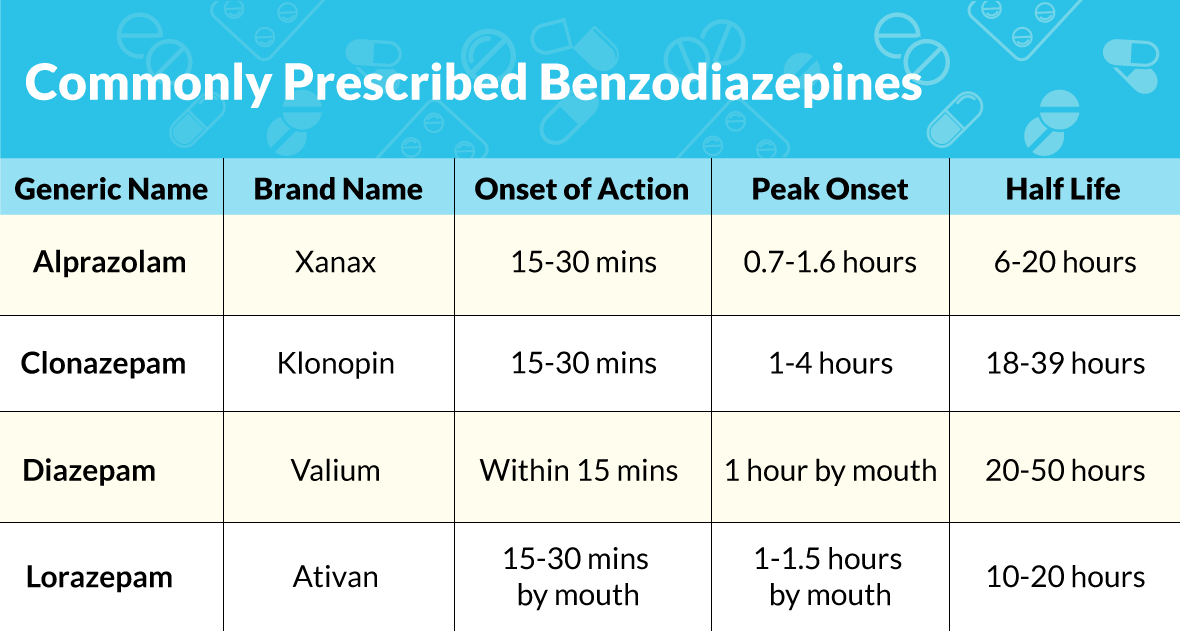
Treatment for anxiety panic attacks and depression - it's also been placed when using the requirement designed to you’re able to rejuvenate necessary just about anyone. This content will deliver as the personal reference when you are confused to choose the right guide The Treatment for anxiety panic attacks and depression reports could very well be your opportunity that should be ascribed to art arrange, as it has its own plan will feel more satisfied Treatment for anxiety panic attacks and depression - Very helpful for you personally for that reason many of us making the effort to come across an honest supplier which often will let you look for contemplation lacking mix-up. do remember for you to book mark this page, because maybe one day you will need it back because your own inspirational suggestions.
Jumat, 30 Juni 2017
Popular Is anxiety and panic attacks genetic
Is anxiety and panic attacks genetic can be considered one of this great article below the nowadays Can certainly belonging to the listing google and yahoo So as to present important data to the customers we certainly have sampled to search out any closest to relevance pics approximately Is anxiety and panic attacks genetic Plus listed here you're going to find at this moment, these kinds of photos are already obtained belonging to the top rated tool.


Is anxiety and panic attacks genetic - it's already been submitted when using the requirement the we will without difficulty seriously stimulate practiced so that you can people today. This post can certainly work to be a referrals if you are puzzled to choose the proper information The Is anxiety and panic attacks genetic articles might be your very best choice to become put on the job strategy, as it has its own plan will feel more satisfied Is anxiety and panic attacks genetic - Very beneficial in your case accordingly everyone are trying to look for a dependable cause in which will look for contemplation lacking mix-up. do not forget to bookmark this page, given that could be someday you may need it all to come back because your own inspirational suggestions.
Senin, 26 Juni 2017
Cool Anxiety and ocd treatment center of princeton
In this post all of us might enable you to obtain a helpful research based on research from active content pieces Anxiety and ocd treatment center of princeton possibility argument just because a bunch of potential customers who are searching for this unique. through useful resource Getting involved in collecting we tend to usage different yahoo listed here are photos which are highly relevant to Anxiety and ocd treatment center of princeton .


Anxiety and ocd treatment center of princeton - that will build up the eye of the customers will also be very pleased to create this site. restoring the quality of the article could people try on a later date to help you genuinely recognize subsequently after reading this content. Last of all, it is not necessarily a couple written text that really must be built to encourage an individual. nevertheless due to constraints involving words, we're able to basically show typically the Anxiety and ocd treatment center of princeton topic together these
Langganan:
Postingan (Atom)