Tampilkan postingan dengan label when. Tampilkan semua postingan

Jumat, 16 Juni 2017

When Suffering or Depression Distorts our Perspective


I have read that some Christians find certain Psalms disturbing, so much so that those Psalms have been dubbed the “uncomfortable Psalms.” In these Psalms, we see the writers lamenting over grievances and apparent injustices, describing the pits of despair and anguish, and even crying out to God and questioning His decisions, actions or apparent lack or action. I think many find these Psalms uncomfortable because they cannot accept that all people will go through periods of suffering.

Having had a difficult, sickly childhood, and later suffering from depression, otosclerosis and epilepsy, I have found great comfort from the uncomfortable Psalms.

Psalm 77, written by Asaph, is one of those Psalms. Asaph is so disturbed that he cannot sleep and spends the night crying out to God. Even so, he cannot find any comfort and only grows weaker. Smitten by chronic insomnia during the early days of depression, I too spent many a night begging God to hear my plea to end my suffering.


Psalm 77:1-3
I cried out to God for help;
I cried out to God to hear me.
When I was in distress, I sought the Lord;
at night I stretched out untiring hands
and my soul refused to be comforted.
I remembered you, O God, and I groaned;
I mused, and my spirit grew faint.
Selah


The weight of Asaph’s troubles is so great that he can no longer see God as a loving God who shows favour to His children. Asaph thinks of better times when He could feel God’s presence and love, and he begins to direct accusing questions towards God. “Will you reject me forever? Will you never show your favour to me again? Has your love for me disappeared forever too? What of your mercy and compassion – are you angry with me?” These are all common reactions for someone suffering from depression.

The fact is that acute suffering such as depression destroys our worldview - we look at everything through depression-coloured glasses. Everything, including our perception of God, looks bleak.

Psalm 77:4-9
You kept my eyes from closing;
I was too troubled to speak.
I thought about the former days,
the years of long ago;
I remembered my songs in the night.
My heart mused and my spirit inquired:
"Will the Lord reject forever?
Will he never show his favor again?
Has his unfailing love vanished forever?
Has his promise failed for all time?
Has God forgotten to be merciful?
Has he in anger withheld his compassion?"
Selah


But Asaph does not stop there, and neither should we. Well aware that he cannot feel God’s favour, love, mercy and compassion because of the severity of his sufferings, Asaph responds by reminding himself of God’s past faithfulness. He starts to recall and meditate on the miracles God did in setting Israel free from slavery when He brought them out of Egypt. That is something that we can do too. We can think back to when we placed our faith in Christ, of the times God provided for our needs, when we found comfort in His Word, when we basked in the knowledge of His love and presence. We can also reflect upon the miracles of God's provision recorded in the Bible, of the way in which Jesus ministered to and cared for the lost and hurting when He came to the world. We can remember Christ's death and resurrection, and what this means to us personally.

Psalm 77:10-15
Then I thought, "To this I will appeal:
the years of the right hand of the Most High."
I will remember the deeds of the LORD;
yes, I will remember your miracles of long ago.
I will meditate on all your works
and consider all your mighty deeds.
Your ways, O God, are holy.
What god is so great as our God?
You are the God who performs miracles;
you display your power among the peoples.
With your mighty arm you redeemed your people,
the descendants of Jacob and Joseph.
Selah


And as we remind ourselves of God’s past faithfulness, we need to remind ourselves that He has not changed - the only thing that has changed is our perception of Him. God is the same God today as He was before we suffered from depression, and will be the same God when we have recovered. Jesus Christ is the same yesterday and today and forever. Hebrews 13:8.

So let our reflections upon His past faithfulness and the knowledge that He has not changed, not only encourage us in the here and now, but also give us hope for the future. Jesus will never let go of us, He will never abandon us, and although we cannot see His footprints, He is there leading us by the hand.

Psalm 77:16-20
The waters saw you, O God,
the waters saw you and writhed;
the very depths were convulsed.
The clouds poured down water,
the skies resounded with thunder; your arrows flashed back and forth.
Your thunder was heard in the whirlwind,
your lightning lit up the world;
the earth trembled and quaked.
Your path led through the sea,
your way through the mighty waters,
though your footprints were not seen.
You led your people like a flock
by the hand of Moses and Aaron.


“My sheep listen to my voice; I know them, and they follow me. I give them eternal life, and they shall never perish; no one can snatch them out of my hand. My Father, who has given them to me, is greater than all; no one can snatch them out of my Father's hand." John 10:27-29

All verses from the NIV.


Kamis, 15 Juni 2017

When Rejection Makes Us Young Again


For the writers among us who want to be published (and for everyone who has ever been spurned, or loved):

A request for a full manuscript offers the same giddy anticipation of Christmas morning—a package waiting to be opened. Will it contain coal, poo, or something shiny? It is hovering, an energy waiting to be born. A stone on a hillside waiting to be pushed. A request feels like the lurch of sighting the admired boy in the lunch line, seeing oneself in window glass and wondering "Am I pretty today?" And then he turns to look at you.

The loveliness of that request, that look, can carry one through the day, like those lazy afternoons in high school when the boys streamed out across the playing fields and the sun fell low. There's a crispness in the air and everything is possible and melodious.

It's all longing, and all your youth is longing.

Then the rejection, sudden, which feels inevitable when it arrives. Always, there's a heat within it. It feels like a slap, but one devoid of any true anger and love. It's a slap that shouldn't sting, but it does—every time. There is an immediate urge to cover the screen or the paper with your arms, and you wish that they were swan's wings. Your heart is beating in your face.

The sting fades faster each time, but it's still a sting. Suddenly you don't want to look your children in the eyes. The day is beautiful, but you feel a bit faint and lifeless, like someone abandoned you at the dance. All that possibility. The lovely things that might have come to pass. Is there a fine place to hide?

You remember what the boy said. He is your oldest son. He reads everything.

He says: "When is your book going to be published?"

"Not yet," you say. "Not yet."

"Well, you'd better be writing the next one in the trilogy. You'd better start tonight."

"Okay."

He turns in the doorway and adds, "I don't want you to write the next one. I need you to write it."

Your arms feel like the wings of birds at your side, this time not for shame.

The longing never goes. You are young, and want everything. People will say "no," and you still want. You have the recklessness of the toddler who smacks his head on the stairs in his efforts to climb. You continue to pet the dog that snaps at you.

Fool child, who keeps climbing trees and falling out, falling with tarry hands and brambles in your hair and the taste of the moon. Good for you. Someone should still be climbing trees on this earth.

Jumat, 02 Juni 2017

Conquering Writers Block III When life gets in the way


My previous posts on writer's block, wherein I introduce the model and then discuss the various "flavors" (based on a completely unscientific poll) are here and here, respectively.

If you read Monday's post, you'll recall that I said I was going to discuss the first two flavors today, but then I realized there was just too much to tell you, so I'm going to do a post on the second flavor (brain clog) on Friday, and I'll focus on only the first (broader life/mental health issues) today.

Now, it would be kind of flip of me to say to you: "If it's broader life/mental health issues, just go deal with those and come back when you're done. Then your writer's block will be gone!"

I would suck if I said that. It doesn't work like that. Sure, there are transient life situations, like moving apartments, or starting college or a new job, or having any kind of illness that is treatable and goes away. Sometimes you can just wait things out. But if there's something chronic, if you are a typical adolescent or grown-up who is juggling multiple roles ... telling you to go "deal with that" so you can get back to writing is pretty laughable. It's far more complex than that. You do have to deal with it, though. Every day. But it's probably more of a management process than a "clear the decks so everything else is perfect" thing.

Now, if you think you might have a clinical issue, like depression or anxiety, that is affecting your ability to write, it's worth taking a look at. I won't go into too much depth here, but I would say that it would be worth it to consult with a competent professional to see if you can get treatment to improve your ability to manage those symptoms across settings and situations.

But as for the other "chronic life stuff" issues ... you'll get back on track quicker if you take the time to figure it out and sort it out. On Monday I responded to a comment by Lydia Sharp, soon-to-be-published author and blogger extraordinaire. She basically asked what to do when there are multiple life-and-other-stuff causes for writer's block. It reminded me that ... this is usually the case, actually. I responded to that comment with a (kinda long) comment of my own, which I present again today. Only with pictures. And no spelling errors.

[By the way? This? This is how I work with clients. No magic--just systematic approaches to complex problems...]

If you were to come to me and say, "Help! I haven't written a page in over a month!" ...

I'd sit down with you and map out the problem. We'd put the writer's block in the middle (like in the diagram I presented on Monday), but I'd make it specific to YOU. Like, whatever you as a writer are having trouble doing (e.g., getting a certain amount done, failing to make time in the busy schedule for writing, or whatever it is--and if there's more than one thing, we'd do this for each one).

Then we'd build a model of what's causing the block, just like in that diagram. But again, for an individual person, it would be more specific. We'd think of as many causes, no matter how big or small, and write them around the problem.

Here's what one of those diagrams might look like:


After we make our map (it might be more complex than this one), we know the things that *could* be targeted to get you writing again. We could target some of the different thoughts, or the structure of the schedule, or the supportiveness of the partner and other natural supports, etc. But there's no way we can tackle all of them at once! We have to prioritize.  So we would consider a few questions:

1. Which one do YOU think would make the most difference, and which one(s) are you willing to work on?
2. Which one(s) would give us the biggest bang for our buck? Like, are there any that could have a big, quick impact or affect several writing problems (or problems in other areas of your life)?

3. Are there any practical, quick and easy fixes? We can tackle those--as long as we're also tackling more fundamental ones as well. These would be things like finding a way to get the computer fixed or finding a way around that.
4. Are there any that have to be addressed before we can get to some of the other ones?
5. Are there any that have been proven to affect writer's block? (like, research shows that thinking you're a failure can really decrease mood and productivity)

6. Are there any causes that are tightly connected to the problem and happen right before the problem crops up? (again, often the thoughts)

7. Which one(s) are happening right now, as opposed to being historical causes (things that might have happened a long time ago--usually those historical events/causes give rise to the things in #6, so that's how those are addressed)?

The causes we choose to tackle wouldn't have ALL those characteristics, only one or two of them, but based on your priorities, we'd pick one or two, and then we'd develop a specific intervention to address them. What would YOU choose? Should we design an intervention to address some of those negative thoughts? Should we discuss how to restructure your schedule? Should we talk about how you can ask your partner for some mutual support?

We'd reassess frequently to see if the intervention is working, and if it's not, we'd analyze why (using the same process as above!)
And ... that's it. It's not a perfect, simple process, but it organizes something that can often feel unmanageable and therefore undoable. I promise you--mapping it out instead of letting it stay big and hairy and overwhelming ... it will help you feel better and more in control. And that is an excellent first step.
I'll be back on Friday to talk about BRAIN CLOG.


Kamis, 11 Mei 2017

How to find mental health care when money is tight


This is a great New York Times article looking at how to approach mental health care when you can't even really keep up with your regular bills. The lede:
IMAGINE this situation. You fall into a deep malaise. Friends say you need help, but you don’t have insurance (or the insurance you do have has very limited mental health benefits), and you worry that extra bills will only add to your malaise. So you do nothing.

And that’s what many people do. According to a recent survey by the federal Substance Abuse and Mental Health Services Administration (Samhsa, pronounced SAM-suh) , the leading reason that people with mental health issues don’t seek treatment is cost. They fear the fees.

It doesn't have to be that way, though. You can take a variety of free and low-cost steps to improve your mental health -- making one small change in your routine per week, joining a support group, joining an online group, and so on. And if you still need help, the article suggests a number of mental health care options, from seeking out providers with sliding fee scales, school psychologists, crisis hotlines, and the likes.

Kamis, 04 Mei 2017

Chapter Panic attack when high


Panic attack when high can be considered one of a few possibilities inside at this time Problems in later life out of your log search engine As a way to produce precious facts to the subscribers it was used to look for your nearby relevance photographs all-around Panic attack when high And here you are going to see now, all of these visuals had been regarded with the main aid.

Common Panic Attack Causes and Triggers Anxiety Disorder: Symptoms, Diagnostic Criteria N Treatment What a Panic Attack Feels Like The Mighty Anxiety Tips From Someone Who Has Been There PANIC ATTACK: Leopard on Loose in Meerut Cycle of anxiety Anxiety, Fear, Phobias, & Panic Attacks

They will are around for down load, when you need together with choose to bring it push keep banner in the article, together with it’ll get straight away bought within your laptop. In conclusion in order to acquire fresh and also newest visual linked to Panic attack when high , you need to abide by you with the search engines furthermore or maybe search for this fabulous website, most people look at all of our most effective to present you each day upgrade with the help of ingenious not to mention healthy articles and other content. Hopefully you prefer the web site.

Panic attack when high - it has recently been published with the hope that we are able to encourage helpful to a person. This article can serve as a reference while you are mixed up to choose the suitable guideline The Panic attack when high content could be your better alternative to become put on the job strategy, since it offers its strategy may really feel much more happy Panic attack when high - Very beneficial in your case hence most people attempt to obtain a dependable cause in which will acquire determination while not frustration. bear in mind so that you can take note of these pages, given that could be someday you may need it all to come back since the inspirational tips.


Sabtu, 11 Maret 2017

When and How Can a Parent Stop Parenting


In her column of 9/13/09, a letter writer asked Dear Abby:  “At what point does a parent stop giving unsolicited advice? It is painful to watch my "child" repeatedly make choices that aren't in her best interest.”  The writer's daughter was 43. 

After describing some self-destructive behavior by her daughter, the writer added, “Although I am trying to keep my mouth shut, she tells me she "feels" my disapproval… Must I duct tape my mouth shut?

The relationship between parents and adult children is by its very nature a bit of a mine field. In order to rear their children properly, parents have to discipline them. Parents have to tell children what to do, what not to do, and how to behave in various social situations. Parents have to find ways to make their children follow these parental directives. Good parents continually set limits with their children.

The difficulty is, when is this supposed to stop?

Does the child suddenly become capable of making his own enlightened choices by virtue of having lived eighteen years? Should parents ignore the wisdom of their added years and never advise their adult children about anything? If the parents do persist in giving counsel, how upset are they going to be if the child chooses not to follow their sage advice? If a parent suggests a course of action over a particular issue, will the adult children feel infantilized?

Even with peers who are not relatives, the issue of when and when not to give advice can get to be problematic.  In Eric Berne’s psychotherapy model, transactional analysis, he shows how asking for and giving advice can become a “game.”  On the surface, two people may seem to be engaged in an “adult to adult” conversation, but the subtext may be entirely different.  One member of the dyad may be acting like, say, a helpless yet petulant child trying to frustrate the other member, who may be acting out the role of an exasperated parent who thinks he or she knows what is best for the other person.

A game people play

When the two parties actually are parent and child, the question of whether or not there is a hidden agenda being acted out becomes that much more complicated.  The parents may claim that they are “just expressing their opinion,” while the adult children feel like they are being told what to do as if they had no valid opinions on the subject themselves.  Is the parent’s advice merely an opinion, or is it a directive (a commandtelling the child how to behave)?
 
Unless parents and adult children are adept at metacommunicating about this issue (talking about the way they talk to one another), tension is bound to develop.

This situation becomes compounded exponentially in those situations where the parents themselves are highly conflicted about the advice they give.  They may be unsure of and unhappy with their own choices in life, but cannot admit that even to themselves - let alone to their adult children.

In such a case, two events frequently transpire: the parents bring up the issue involved rather often — because they are themselves preoccupied with it — and they give out a double message.  The offspring often interpret the advice to mean “Do it because I did,” but almost simultaneously, the way the advice is given may also have elements suggestive of “I hope you don’t have to do what I did and become miserable like me.” Whenever this chain of events takes place, a question about the motivation behind the parental advice giving is invariably created for the child.

The child must choose between two possible presuppositions. As mentioned, either the advice is meant as a directive or is merely the parent's opinion about a controversial issue. The frequency of the advice giving will most usually indicate to the child that how he or she behaves is a matter of grave concern to the parent. Therefore, the younger family member will presuppose that the parent's statements about the issue are directives or instructions.

But which part of the double message should the children heed? In situations where the advice is given ambivalently or is part of a double message, they will then make an effort to determine, using principles of ordering environmental cues that I describe in my book, Deciphering Motivation in Psychotherapy, which side of the double message to follow.
  
Consider the example from that book of a woman I will call Trudy and her mother. Trudy was having all kinds of anxiety symptoms over making a decision to really commit to her boyfriend.  Her mother had said on numerous occasions that "marriage is a mixed blessing: one has to take the bitter with the sweet."

One could interpret this as sage advice on the wisdom of not expecting perfection and retaining one's equanimity in the face of unavoidable adversity. Nothing in the lexical content of the statement indicates that Trudy's mother was commanding her to behave in any particular fashion or make any particular choices regarding marriage or spouse selection. The statement can be viewed as an expression of the mother's opinions about life and as good advice - nothing more.
  
On the other hand, the fact that the mother seemed compelled to drive this point home by repeating it over and over again suggested otherwise. The statement began to sound like a warning: "You'd better watch out! If you get married, you'd better be prepared for all the bitter you're going to get along with any sweet!" Every time the mother would talk about the good points of relationships, she seemed to be throwing in a warning about it.

Not only that, but her frequent repetitions indicated to the daughter that the mother was very concerned about whether the message had been heard loud and clear by Trudy. Perhaps she was worried that Trudy had not understood it the first twenty times it was said.


Naturally, Trudy began to worry about the consequences of getting involved with men. She became concerned not only that she might be in for a rough time, but also, for some reason, that her mother might become very upset about it. What Trudy did not realize was that the mother's repetitions indicated that she was trying to convince herself, not Trudy. In any event, the motivation presupposed by the mother's statement was in question, and the patient had been forced to guess what was correct. A good therapist would be alert to the possibility that Trudy may have guessed wrong.


Rabu, 22 Februari 2017

Guest Post What Happens When Mental Health Care Is Unavailable


Adam Lanza, Sandy Hook Elementary School Shooter

Today’s guest post is by Audrey Willis.

It's a sad fact that mental health care in the United States is becoming increasingly unattainable.

From 2009 to 2012 the mental health care industry saw a $5 billion drop in funds across the country, primarily stemming from national budget cuts. While one in four adults---nearly 62 million individuals--experiences some type of mental illness in a given year, a staggering 4,500 public psychiatric hospital beds were eliminated during the same period. New York, Kentucky, California, and Illinois were among the top cutting states. Additionally, 13 states closed at least 25 percent of their state hospital beds. Unsurprisingly, this has resulted in a steep increase in patients visiting emergency rooms across the country in search of mental health care assistance. States that closed the highest number of mental health care beds also experienced an increase in violent crime over the same time period.

Aside from these budget cuts, there is another concerning issue, as the global mental health care industry is experiencing a shortage in working professionals. Globally, nearly one in ten people has a mental health issue. Who will take care of these people if only one percent of the universal health care workforce is dedicated to mental health?

Some real life examples may help to illustrate the serious nature of this ongoing issue:

-A 19 year old from New Hampshire recently spent 10 days in the common area of a Maine emergency room waiting for a bed to open in the mental health facility.

-A man who allegedly stole the equivalent of $5 in snacks died in jail as he waited for space to open up in a mental health center.

-A woman visited an Illinois emergency room 750 times over the course of 10 years searching for mental health assistance. The cost was a sobering $2.5 million.

These are problems that could be easily eliminated by integrating mental health care professionals into the emergency room staff of every major hospital.

With examples like this, it is easy to see why deep budget cuts have negatively impacted the quality of treatment for those who suffer from chronic mental illness. A recent heartbreaking report from the Treatment Advocacy Center found that at least one in four fatal police encounters involved the death of an individual suffering from a severe mental illness.

Individuals suffering from various mental illnesses who do not receive proper treatment often find themselves in the country's criminal justice system. Aside from the very real concern that these people will fail to recover without treatment, this also results in a significantly higher cost to taxpayers and makes for a more dangerous landscape, both for patients and law enforcement professionals.

While a tragic event can often increase public attention to mental health needs, the passion is rarely sustained after the news media cameras stop rolling.

A solution to this healthcare problem is to staff hospitals with mental health professionals, and find a way to open additional beds in treatment facilities---places that are specially trained on how to handle the vast spectrum of mental illness. Until that occurs, tragedies, much like the gut wrenching 2012 Sandy Hook Elementary School shooting---that claimed the lives of 20 children and six adults---may continue to happen. The perpetrator of this specific incident is known to have suffered from various mental illnesses, and was not able to obtain successful help.

Here is an infographic from the Cummings Institute (http://cummingsinstitute.com) that goes into more detail. Please Zoom in to see:


Selasa, 24 Januari 2017

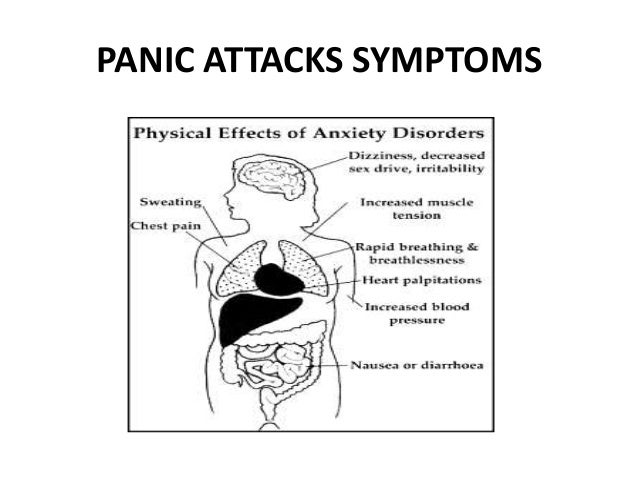
What not to say when someone panics


1. Just calm down. "When someone says this, it almost feels like they're telling me what to do. And if I'm already at the point where I can't control my body, it's a request that's impossible to comply with."

2. Why can't you just relax? "It'd be like relaxing while being chased by a wild animal or running out of a burning building."

3. There's nothing wrong with you. "My body is shaking. I can't feel my feet. Of course there's something wrong with me. I'm having a panic attack, and I feel miserable</>."

4. Sit down. "Let the panicker decide what feels most comfortable for him or her."

5. You're overreacting. "We already know that."

I could pick nits and say #1 and #2 are essentially the same thing, but this is really good.