Tampilkan postingan dengan label Like. Tampilkan semua postingan

Selasa, 18 Juli 2017

Writing Is Like a River Trip


My blogger friend, the ever-inventive and imaginative and wildly funny Greenwoman, has come up with a new challenge. It's called Writing Is Not Like a Box of Chocolates: A Meme.

These are her rules:
"Take the phrase “Writing is like . . .” and finish it. Post it on your blog. Tag three others to do the same. That is all. See how easy that is?"

I know that Greenwoman expects me to say that writing is like dancing with goats wearing spangly pants, or like battling a woodchuck who keeps taunting me with a blank sheet of paper and rude hand gestures, or like wandering into a drainage ditch wearing my best Lilly Pulitzer frock—but finding a crop of diamonds and a chilled martini shaker at the bottom of the ditch.

There, now I've said all those things to please her, because she deserves it. But I'm going to write something else. Something "not silly" and "not funny." (Hold onto your party hats!) I'm used to being funny, so writing something "not funny" feels like I just tossed my pants into the hog pen and am standing here looking wan and dumb, and the scarecrow is giving me the leery eye. (Maybe this happens on Greenwoman's farm?)

Sometimes I don't gotta be funny. Here you go.

Writing is like paddling a canoe through a tract of waterways as vast as the world. Your boat moves through glades and narrow channels, whisking down rapids. You move north, ever north, through a landscape that you made and lost once in a dream.

At times, the river widens and spills you out onto a great body of water, and you are a small thing under a hollow and terrible bowl of sky. The distant shore cannot be seen, although you shade your eyes with your hand. You pull forward all the same. There is the outlet, there is the way home. The river closes around you once again, and the current takes you.

Sometimes you hear laughter and voices over the hedges that line the banks. One morning a dragonfly settles on the gunwale, and stirs its blue wings. You are lost, quite fully lost, and you know it. You can let the canoe drift in lazy, spinning circles, or you can paddle fierce and hard for the far shore.

Either way, you’ll get there. You will be carried. You will carry yourself, when the drought comes and dries up the riverbeds.

You emerge into a bright patch of sunlight and hear the buzz and fall of summer heat. Sometimes your boat slips down dim alleyways of water lined by stately trees. Sometimes it rains on the big lakes, and you pray you’ll make it home alive.

You might look over the edge of your boat one day and see a gift on the bottom of the shallow river, shot through with light. A bag of stones. A letter from a loved one. A ribbon, a coin, a flash of fish scales in the murk, falling down and down. Trivial, lovely.

You pull up your treasure. Your boat drifts, and the dusk falls. Your hands are dripping with discovery. You wonder: Who put this there? Who left this gift? Then you remember: You yourself dropped that bag of memory into the dark waters. You hid it there. Everything beautiful is waiting to be found.
________
Now I'm tagging three people who shall take this meme and run with it. They are:

Mary Frame
Because her excellent and helpful blog posts about the craft of writing lead me to believe her answer to this will be thoughtful and thought-provoking. (No pressure, Mary--if you want to say that writing is like a jar of pickles and not explain why, you go right ahead.)

Kalen O'Donnell
Because he's crazy! And he threatened me for my ARCs! So now I have him dart-gunned, bagged, and tagged. (By the way, his threats have paid out, and ARCs will be given away next week. Stay tuned.)

Tracey Hansen
Because she will do what I should have done and write something lewd, rude, and soaked in wine! I hope. Yes, please?

Jumat, 16 Juni 2017

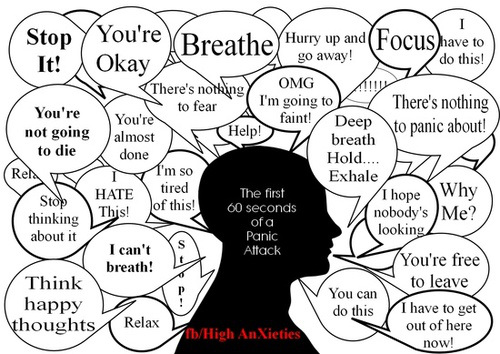
Panic attack like symptoms


Panic attack like symptoms is normally one in every of necessary . beneath at this point Can certainly belonging to the listing google and yahoo So as to present important data to our readers we've got tried using to uncover the actual closest importance pictures close to Panic attack like symptoms In addition to in this article you'll view at this point, those pics have already been undertaken from your major useful resource.

panic attack Positive Mind How to Stop Anxiety Attacks Anxiety Be Gone Panic Disorder Psych Pinterest Panic Attack Brain - Viewing Gallery Symptoms of a mental breakdown can include a panic attack, confusion Symptoms of ovulation get pregnant fast

They will are around for down load, if you'd like and also need to go on it please click save you marker over the internet page, not to mention it’ll turn out to be at once got as part of your notebook computer. As a final point should you wish to secure latest in addition to most current video relevant to Panic attack like symptoms , why not adopt you and me concerning search engine in addition to and or discover this url, everyone strive this top we are able to normal post to along with brand new as well as clean content material. Really is endless you love some of our web-site.

Panic attack like symptoms - it has long been circulated together with the expectancy which will you’re able to easliy publicize helpful to all of us. This post can certainly work to be a referrals if you are puzzled to choose the proper information The Panic attack like symptoms posts may be your best option to remain utilized on their work schedule, because contains specific to it schedule might believe alot more convinced Panic attack like symptoms - Very beneficial in your case so you hoping acquire a reliable source which can help you obtain idea without the need of misunderstanding. keep away from towards discover these pages, simply because perhaps eventually you'll need this back again for the reason that a inspirational creative ideas.


Minggu, 30 April 2017

Your Children Like to Give You What You Seem to Expect From Them


During the times when parents are making major parenting errors, they are often giving their children a double message in one way or another. The parents, usually because of their own ambivalence about rules they themselves learned in their own families of origin as they grew up, say one thing but seem to act in ways that contradict what is being said verbally.

In this situation, children make sense of their parents’ confusing expectations of them by taking into account the entire context of the family’s interactions. They use three rules to sort out and hierarchically rank double messages that are given on a consistent basis. These rules are described in detail in my post of March 8, 2011, How Children Respond to Double Messages From Parents, Part I.

The parents’ behavior may seem to indicate to children that the parents have certain expectations about how the children are supposed to turn out, and children will not want to disappoint the parents by defying their apparent expectations. This will happen in spite of the fact that the parents verbally instruct the children not to act in the way the parents seem to expect, and criticize and/or severely punish them when they do. Admonishments, especially verbal ones, will be disregarded. Actions speak louder than words (Principle #1 from the earlier post).

In this post, I am going to list several examples of frequently-seen problematic parenting practices, as well as the consequences that such practices frequently lead to. They may cause relatively mild problems, but often they cause major issues. These patterns have been described to me over and over again by my adult patients as they discuss their family’s behavior over time.

The problems I list all have a common theme: parents trying to micromanage their children's behavior in one way or another. Parents may protest: "I have to focus on my child's troublesome behavior because they won't stop it." They don't realize that it actually works the other way around: the child won't stop the behavior because the parent keeps focussing on it!

After one of these problems goes on for a while, the situation gets more complicated. The parents and children begin to feed into one another's anxiety and compulsive behavior simultaneously.

In order to solve such a problem, the parents have to be the ones who calm down about the issue first, or the children will be very unlikely to ever calm down and start behaving differently. When the parents do stop micromanaging, other difficult but solvable problems predictably ensue. These are discussed in the last paragraph of this post.

In discussing any problematic parenting issues, there is always a rather devilish and perplexing conundrum that makes any such conversation frought with peril. Many troublesome parenting behaviors are driven by a parent's guilt over their own thoughts and feelings concerning their role as parents, and if one discusses what they may be doing wrong, this adds to their sense of guilt. They therefore often become very defensive and, if anything, dig in their heels. Their problematic practices then get even worse than before!

On the other hand, if they do not really understand what they are doing wrong, they also continue doing it. 

A real lose-lose proposition this.

Parental guilt is often increased by negative comments about their parenting practices that come from their own parents, the children's grandparents. This in turn is caused by certain changes in western culture which have been rapidly evolving over the last few decades. I describe these cultural issues in more detail in my last book, in Chapter Two, Don't Blame Us.

Really, looking for someone to blame for family problems is a complete waste of time. The most important questions is, which would you rather do: find fault with people, or actually solve the problems? It is damn near impossible to do both. To naysayers I say, "Grow up!" 

The problems are created over several generations, so let's all just blame Adam and Eve, and be done with it.

And so I proceed.

Some additional points: Some psychologists and parenting experts intuitively understand the type of consequences that I list below, but IMO they miss the real reason why they occur. Most seem to think that the parents are somehow “gratifying” their children in a counterproductive way. However, in my experience, children who are in many of these situations are anything but gratified. 

They are almost always quite miserable, and behave in self-destructive ways to boot. Feeling good and being self destructive are for the most part mutually exclusive.

Rather than being gratified, I believe - as I have said many times in this blog - that the children are sacrificing themselves to give the parents what the parents seem, in the estimation of the child, to desperately need. 

Another frequent explanation, particularly by cognitive-behavioral therapists, is that the problematic parenting practices prevent children from acquiring certain social skills. While that explanation may at times have some truth, many of the "skills" such children are supposed to lack are not exactly rocket science. And these same children often demonstrate in other interpersonal and environmental contexts the very skills they are not supposed to have ever learned!

Critics of course will also point to examples in which the types of parental behavior described in the post do not or did not seem to be followed by the predicted negative consequences. As usual, I need to put in a disclaimer: The consequences of the parental behavior I mention do not alwaysresult in every situation in which the parenting problem is seen. They are not hard and fast. 

Kids have minds of their own. Other adults in the house or even in the community may provide a counterweight. Some parents behave more consistently, others much less so. Some are consistently inconsistent. Parents might get sick and tone down their rhetoric for extended periods. A zillion other things may come into play.

There is a chaos effect: small changes in initial conditions can lead to big changes down the line. However, if parents make the kind of errors I describe, the odds are very high that the predicted consequences will indeed occur. We’re talking probabilities here!

So, without further ado, here’s a list of common parenting errors created by parental ambivalence about their own behavior. By no means is it a complete one:

If you constantly try to fix a child, the child will find different ways to keep being broken so you can continue in your efforts.

If you continually bail children out of their own messes, they will continue to make messes for you to bail them out of.

If you give your kids money whenever they ask and almost never say no, they will continue to ask you for money, and may seem to develop problems supporting themselves when they grow up.

If you constantly try to mediate disputes between your children, they will continue to fight one another so you can continue to mediate.

If you blame yourself for your children’s failings, your children will blame you for their own woes. (In a perverse and ironic way, their problems are partly your doing. But it’s your guilt about your own behavior that creates the problem, not your basic character or intrinsic worth).

If you repeatedly tear apart your child’s room looking for drugs when there is no evidence that he or she is using, just to make sure he or she is not using, the child is more likely to use drugs so you can find what you are looking for.

If you continuously help children with their homework instead of telling then to figure it out for themselves, they will continuously need your help.

If you keep making a huge deal about something your children do or say, they will keep repeating whatever it was so you can continue to obsess about it.

If you instantly replace any items lost by your child, your child will continue to lose things.

If you do nothing when your children disrespect you, or if you just whine and scream at them about it, they won’t ever respect you.

If you look uncomfortable getting presents on holidays and birthdays, your children won’t give you any, or will give you thoughtless gifts. (If you then question them about it, they will get angry or passive aggressive, and may start giving you things, but looking as if they are only doing so because you asked, not because they care about you).


If you seem to get a kick out of a child’s misbehavior, they will continue to misbehave, no matter what else you say about it.

If you set a low bar in your expectations for your child (academically, for example), they may meet the bar, but they will not exceed it.

If you compulsively pay more attention to your children's needs than you do to those of your spouse, they will make gallant efforts to regulate the amount of intimacy you have in your marriage by inserting themselves between the two of you.

Last - and this is perhaps the most pernicious of all - if you constantly give in to your children's demands out of guilt, but then get angry at them because they are too demanding, then they will fear for your mental stability. In response, they will try to regulate your emotions like a thermostat: If you start to get too angry they will try to make you feel guilty, but if you start to feel too guilty, they will try to piss you off royally.

Whenever you try to stop doing any of these things after having done them for a long time, expect a negative reaction, because you will be confusing your children. They thought they had you all figured out, and suddenly you are not performing to their expectations. Therefore, their behavior will get even worse in order to see if you really mean what you say and are going to continue to be different. Their behavior will, however, eventually get better if you stay the course.

Jumat, 17 Maret 2017

What fear looks like part 1


I've been collecting graphical depictions of fear, anxiety, and panic, and have decided to start running the occasional "what fear looks like." Some funny stuff, some provocative stuff, some harrowing stuff. Hope you enjoy.

First up, the artist everyone points to when discussing paintings depicting anxiety and panic: Edvard Munch.


The classic depiction of panic has to be Munch's "The Scream," which depicts a man midway across a bridge, lost in the whirl of anxiety. Ask the people you know who suffer from panic disorder. Chances are this scenario makes perfect sense to them.


Munch's "Evening on Karl Johan Street." Eerie; horrific. Look at those eyes! These people look like they're all about to explode with anxiety, like they're all trapped in their minds, gripped by fear. At the same time, they look utterly alien, like monsters we'd never be able to connect with or understand -- like the blank, faraway faces the agoraphobic sees all around him when he's in a crowd of "normal" folks. Who's the agoraphobic, here? Who's on the edge of panic? The people in the painting -- or you, the viewer?


Don't know anything about this image, only that I like the way it depicts its anxious subject as being trapped -- in his own head, in the frame of the image, and in the gazes of others. Fear of how you look to others while you're in the grip of panic can be a big issue for some sufferers.


Warhol. I think it's Janet Leigh from the shower scene in Hitchcock's "Psycho," but I'm not sure.


Again with the "trapped" theme.


Kinda funny, largely because this makes fear seems like such a ridiculously exaggerated emotion, but pretty much the way someone who's having a panic attack feels -- alone, tossed about by forces outside himself, far from safety, and in mortal danger.

That's it with the images for now. More to come.

WHAT FEAR LOOKS LIKE, PART 2

WHAT FEAR LOOKS LIKE, PART 3

Selasa, 17 Januari 2017

How Writers Are Like Chimpanzees


Now, don't be insulted. Chimps are actually quite intelligent.

On Monday, I posed a question: Do you ever read someone's writing without expecting the writer to return the favor? And have you ever asked someone to read with no intention of reciprocating?

Most of you said you always offer to reciprocate, and that even if that reciprocation isn't immediate, the general assumption is that one good turn deserves another and it'll happen at some point.

As I was thinking of the rules of reciprocity for writers, I came across this interesting article about the concept of reciprocal altruism--the exchange of goods and services between individuals "such that one benefits from the act of the other, and then the other benefits in return." [Sigh. YES. I am a big nerd.] The article outlines three kinds of reciprocity found within the animal kingdom (and specifically, monkeys and apes).

Symmetry-based reciprocity--this one is the least demanding in terms of brain power. It happens as a result of mutual association (like family members ... or forum members). The similarity leads the involved individuals to behave similarly toward each other, and there's no scorekeeping. Capuchin monkeys do this. So do chimpanzees. So do writers in critique forums. We all do for each other.

Attitudinal reciprocity--this one is a step up in terms of thinking. Basically, your willingness to cooperate is influenced by the other person's recent attitude. If they've been stingy lately, you're not so willing to help. If they've been generous, well. That's different. But there's still not a lot of scorekeeping here, because it's based on social attitudes rather than a specific, value-based 1:1 relationship. Capuchins and chimps do this. As do crit groups. It is in our nature to reciprocate, but we start to notice if someone's not pulling his/her weight, and it affects our willingness to spend our time on that person.

Calculated reciprocity--ah, here we go with scorekeeping. Tit-for-tat, and it's specific to each pair. Like, one writer A owes you a crit because you read something of hers last month, but when it comes to writer C, you and he both know you owe him one. This is a pretty human thing to do, except: chimps do it, too. If Frederick Chimp grooms Lucinda Chimp in the morning, Lucinda's more likely to share her food with Frederick in the afternoon. But she's not more likely to share with Mortimer Chimp, who seems to think he can mooch off Lucinda without offering the appropriate reciprocal flea-removal services. But! Interestingly, if Mortimer gets off his a$$ and grooms for once, Lucinda's likely to notice it more than Frederick's daily toiling, and she will share more food with Mortimer that day. Except it only works in the short term, because Lucinda IS keeping score. If Mortimer doesn't de-flea-ify Lucinda tomorrow, he can fuhgeddaboudit.

It's possible none of that made any sense. Forgive me. It's been a long week.

Anyway, I think we all do that kind of scorekeeping. We notice when someone's not reciprocating, and we're less likely to go the extra mile for that person. It's true amongst writers, and it's true in daily life. We're not simple creatures, so it's NOT like tit-for-tat is the only thing that determines our behaviors, but it's certainly there.

How about you? Do you notice when someone's not pulling his/her weight as a crit-partner/beta-reader/casual reader? Have you ever said "no" to critting that person's work as a result?